The Walking Problem That Founded a Modern Mathematical Revolution
In the 18th century, the picturesque city of Königsberg in Prussia (modern-day Kaliningrad, Russia) was built across both banks of the Pregel River and encompassed two large islands. The four distinct landmasses were connected to one another by exactly seven charming wooden bridges. On sunny Sunday afternoons, the townspeople enjoyed a popular recreational riddle: "Is it possible to take a Sunday stroll through the city such that you cross every single one of the seven bridges exactly once, without swimming or crossing any bridge twice?"
For decades, the citizens walked dozens of candidate routes, but no one could ever find a successful path—nor could anyone prove that it was impossible. In 1736, the legendary Swiss mathematician Leonhard Euler solved the riddle, and in doing so, invented an entirely new branch of mathematics: Topology and Graph Theory.
1. Euler's Genius: The Power of Mathematical Abstraction
Euler's breakthrough came from a profound realization: the precise geographic shape of the riverbanks, the lengths of the bridges, the cobblestone streets, and the walking speeds were completely irrelevant to the problem. The only thing that mattered was connectivity.
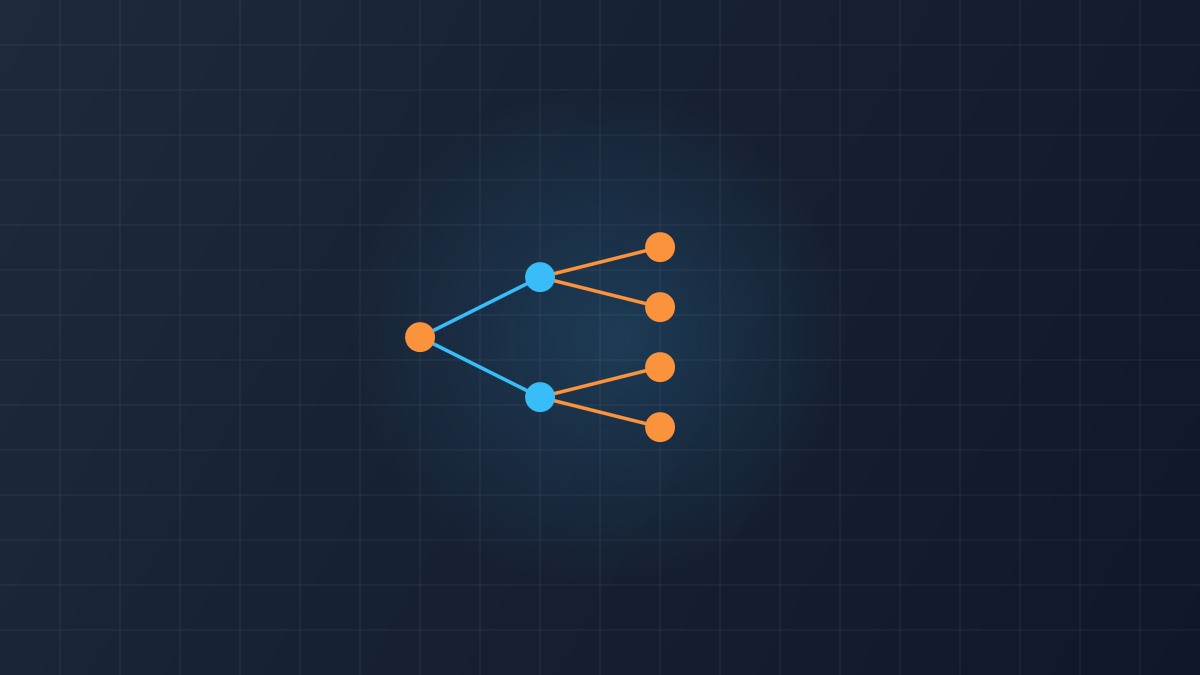
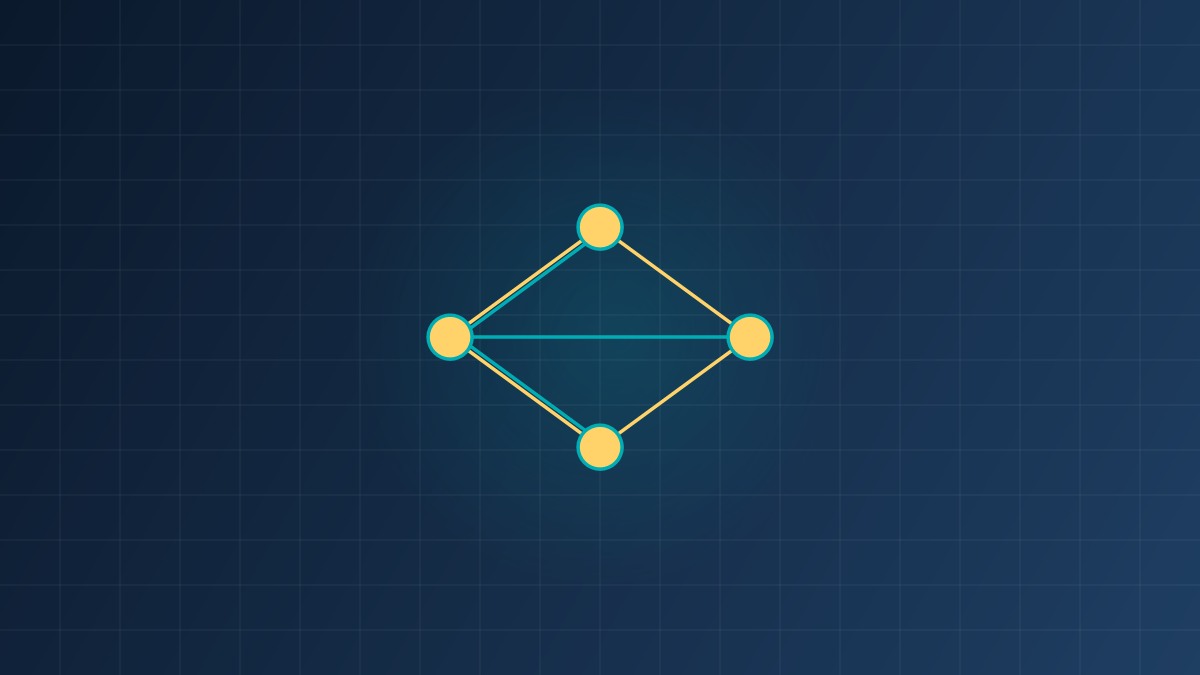
Euler replaced the entire physical city with a simple abstract diagram called a graph:
- The four landmasses became four points, known as vertices (nodes).
- The seven bridges connecting them became lines, known as edges.
By stripping away distracting details and distilling the problem into nodes and edges, Euler transformed a messy real-world geography challenge into pure topological mathematics. When young students learn this abstraction, they discover the foundational secret of mathematical modeling and computer network architecture.
2. The Vertex Degree Rule: The Secret to Eulerian Paths
Euler discovered that whether a continuous path (now universally called an Eulerian Path) exists depends entirely on the degree of each vertex—the number of edges connected to it:
- Every time you visit a landmass during your walk, you must use one edge to enter and one edge to leave. This consumes two bridges.
- Therefore, any vertex that is neither the starting point nor the ending point of the walk must have an even number of edges (an even degree: 2, 4, 6...).
- The starting vertex and the ending vertex are the only two locations that can have an odd number of edges (an odd degree: 1, 3, 5...).
When Euler counted the bridges connected to the four Königsberg landmasses, he found their degrees were: 3, 3, 3, and 5. All four landmasses were odd! Because a valid walk can have at most two odd vertices, Euler mathematically proved with absolute finality that the Königsberg bridge walk was physically impossible!
"Euler proved that knowing when something is mathematically impossible is just as brilliant, powerful, and liberating as finding a solution."
3. One-Stroke Drawing Puzzles: The Euler Test in Action
Children love "one-stroke drawing puzzles"—drawings of houses, envelopes, stars, or geometric knots where you must trace the entire figure with a single continuous pencil line without lifting your pencil from the paper or retracing any line. With Euler's rule in hand, kids can instantly diagnose whether any drawing is solvable before even touching their pencil:
- Count the odd vertices: If a shape has zero odd vertices, it has an Eulerian Circuit: you can start anywhere and you will finish at the exact same point!
- If a shape has exactly two odd vertices: It has an Eulerian Path: you can solve it, but you must start at one of the odd vertices and you will inevitably finish at the other!
- If a shape has more than two odd vertices: It is mathematically impossible. Stop trying to guess and explain why!
4. Four Engaging Classroom Topology Labs
- The Königsberg Bridge Craft Station: Give students construction paper, blue craft river strips, and seven popsicle stick bridges. Have them test routes physically before demonstrating Euler's network abstraction on the chalkboard.
- "Build a Solvable House" Challenge: Challenge students to draw a classic house with an 'X' inside its roof. When they find it has four odd corners at the base, challenge them to add a single new line or doorway to make it solvable.
- Internet Router Simulation: Show how graph theory routes data packets across the internet or airplanes between hub airports, connecting Euler's 1736 paper to modern telecommunications.
- Playground Chalk Graph Walks: Draw giant network graphs on the blacktop with chalk. Students walk the edges, placing beanbags on each line they cross to physically prove Eulerian paths with gross motor movement.
Explore our free printable Graph Theory & One-Stroke Drawing Worksheets on PuzzleNest to turn your students into budding topologists today!