Universal Design in Spatial Learning: Expanding Beyond Sight
Spatial cognition—the ability to mentally visualize routes, understand boundaries, navigate obstacles, and conceptualize geometric relationships—is not inherently visual. While sighted individuals rely primarily on retinal inputs, the human brain is remarkably polymodal: the parietal lobe builds its spatial maps equally well through haptic touch, auditory echolocation, and tactile exploration.
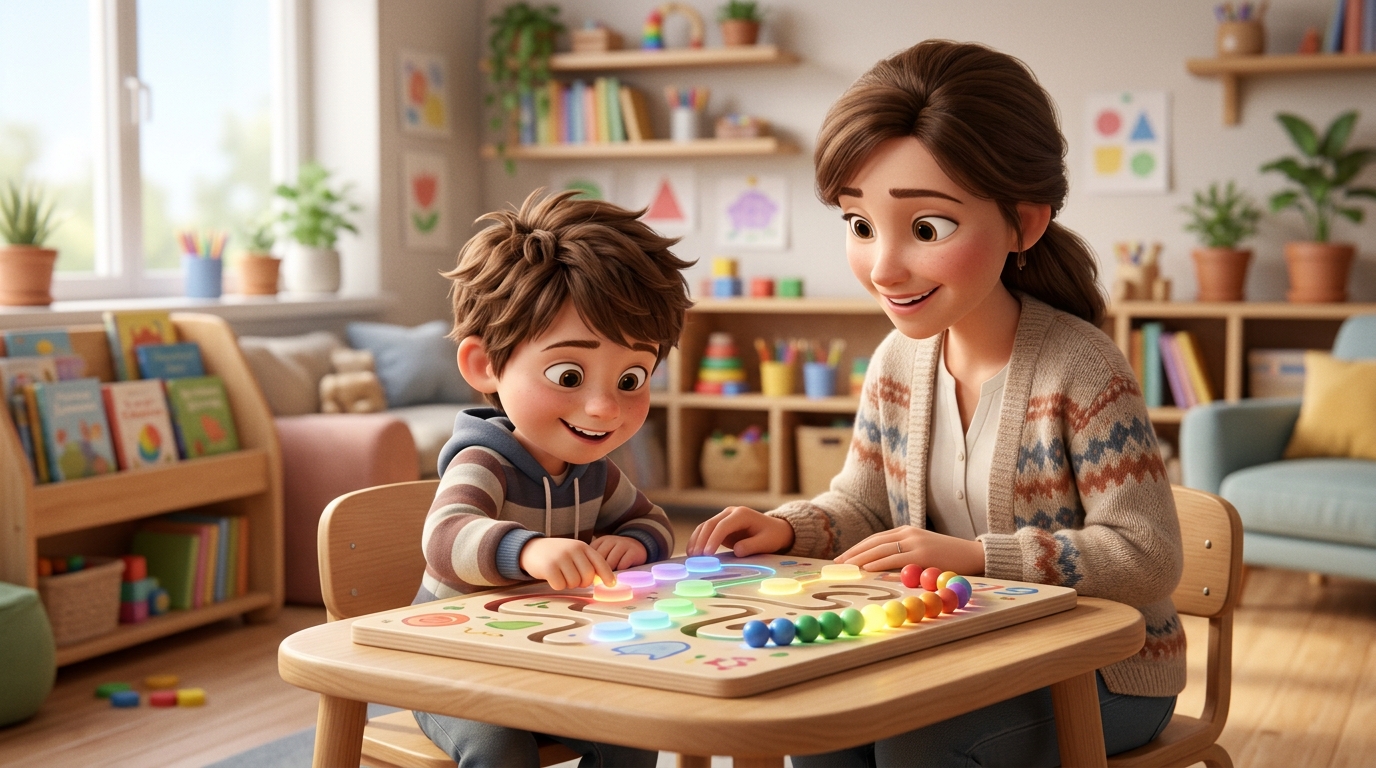
For children who are blind or live with low vision (such as cortical visual impairment, ocular albinism, or optic nerve hypoplasia), traditional print worksheets with faint gray pencil lines are completely inaccessible. Tactile, high-contrast, and raised-line spatial mazes embody the gold standard of Universal Design for Learning (UDL). By translating spatial pathways into rich tactile terrains, these accessible puzzles build essential orientation and mobility skills, spatial confidence, and cognitive resilience.
1. The Neuroscience of Haptic Spatial Mapping
When a visually impaired child explores a raised-line tactile maze with their fingertips, the mechanoreceptors in their skin transmit continuous micro-signals through the somatosensory cortex directly into the posterior parietal lobe. Brain imaging studies demonstrate that the exact same neural networks activated when sighted children visually inspect a maze are mobilized when blind children explore a raised tactile line.
Tactile maze navigation provides critical training for Orientation and Mobility (O&M). Navigating a tactile pathway on a desktop mirrors the real-world challenge of using a white cane to follow a shoreline sidewalk, locate building entrances, and avoid physical obstacles. Children learn to anticipate forks in the road, track boundary perimeters, and recover from dead ends with calm self-efficacy.
2. High-Contrast Visual Scaffolding for Low-Vision Learners
Over 85% of children classified as legally blind retain functional residual vision. For these low-vision students, thoughtful graphic adaptations make an immense difference:
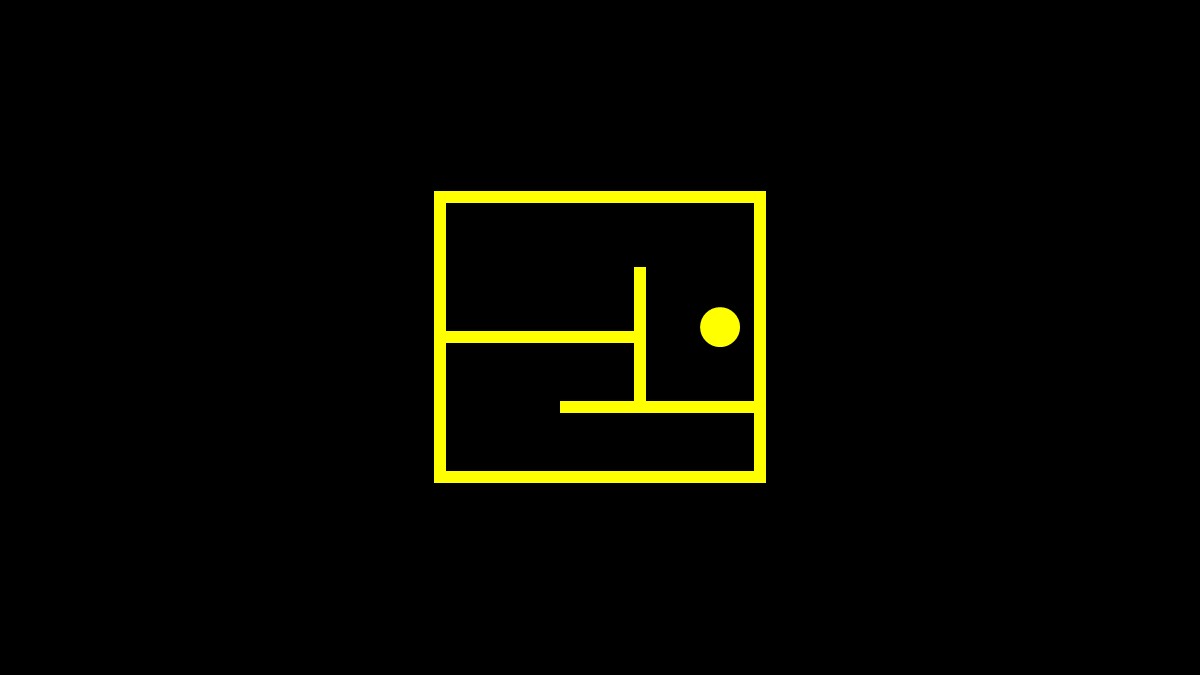
- Maximum Luminance Contrast: Replace standard light-gray lines on white paper with stark, bold black walls on brilliant yellow cardstock, or radiant fluorescent cyan lines on deep velvet-black backgrounds. Yellow-on-black provides the highest possible contrast ratio and minimizes glare.
- Ultra-Wide Pathway Corridors: Corridors must be widened to at least 15mm to 20mm, allowing students with restricted visual fields (tunnel vision) or nystagmus to comfortably track pathways without losing their place.
- Elimination of Visual Clutter: Remove unnecessary background decorative clip-art, extraneous text, and complex shading that can cause visual crowding and cognitive fatigue.
"Accessibility is not an afterthought or an accommodation; it is the universal guarantee that every child's mind has an open doorway to explore spatial wonder."
3. Low-Cost Methods for Creating Raised-Line Tactile Mazes
While specialized thermal expansion machines (Swell form paper) produce professional raised tactile graphics, educators and parents can easily create extraordinary tactile mazes using everyday classroom materials:
- Dimensional Fabric Paint (Puffy Paint): Trace over the printed maze walls with bottles of dimensional craft paint. As the paint cures overnight, it forms smooth, rubbery 3D ridges that fingertips can track effortlessly.
- Wax Craft Sticks (Wikki Stix): Children can bend and press reusable wax-infused yarn strips onto laminated cardstock to build their own custom tactile maze walls.
- Hot Glue Gun Line Tracing: Run thin beads of hot glue along maze borders to create firm, durable raised pathways.
- Textured Medium Contrasts: Fill the maze corridor with fine-grit velvet paper while leaving dead ends as rough sandpaper, providing rich tactile cues that distinguish open paths from dead ends.
4. Four Inclusive Classroom Spatial Activities
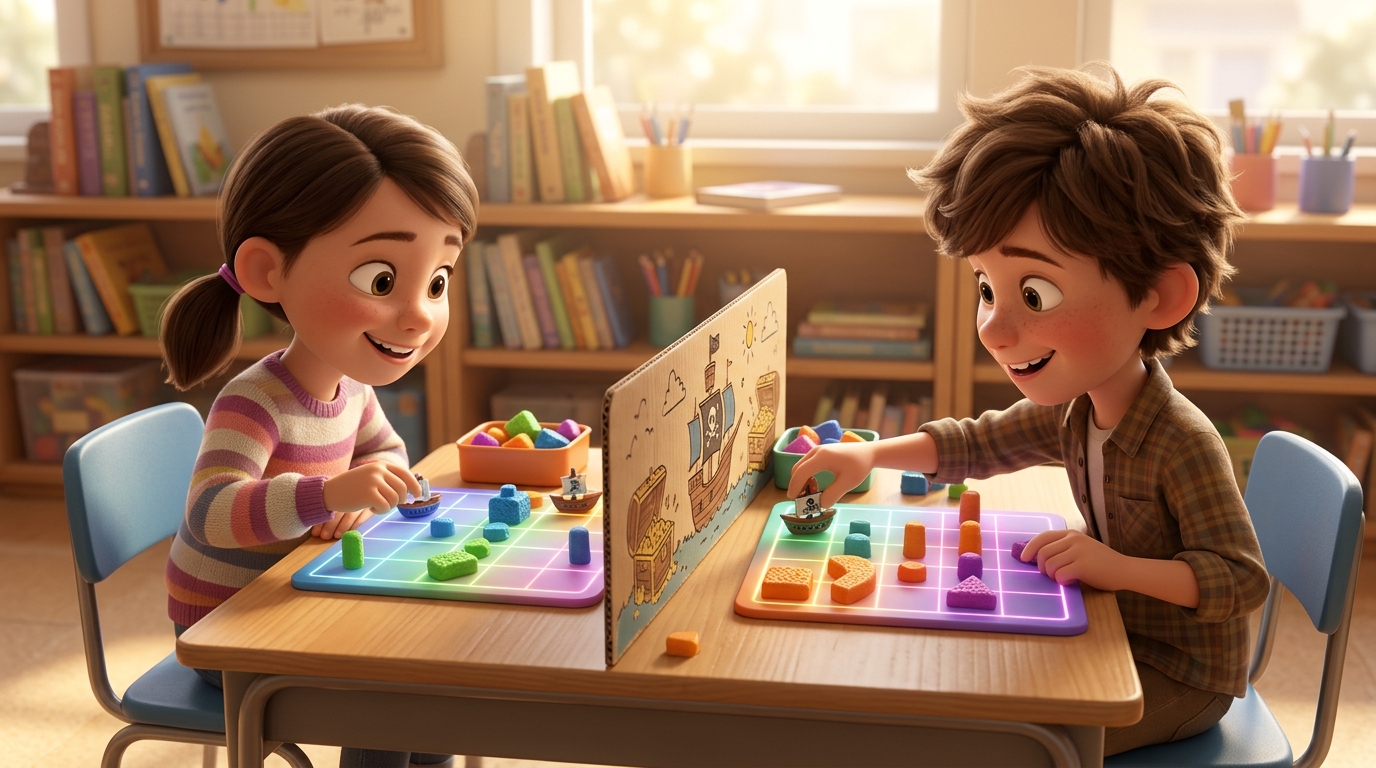
- The Blindfolded Sensory Swap: Sighted students wear soft blindfolds and attempt to solve a raised-line tactile maze using only their fingertips, fostering profound peer empathy, active listening, and somatic awareness.
- Auditory Chime Navigators: Place a tiny bell or sound buzzer at the goal of a tactile maze. Students use auditory cues to orient the general direction of the target while exploring pathways.
- Braille & Tactile Symbol Hunts: Embed contracted braille letter tiles or raised geometric shapes (cubes, stars, spheres) along the maze route, challenging students to identify items through touch.
- Tabletop Orientation Maps: Use tactile mazes to represent simplified floor plans of the school library or playground, teaching students how to transfer desktop map literacy to real-world navigation.
Explore our library of free printable High-Contrast & Tactile-Ready Maze Templates on PuzzleNest to create truly inclusive learning spaces today!