Understanding Sensory Overload in the Modern Classroom
For neurodivergent children—including those on the Autism Spectrum (ASD) and learners diagnosed with Sensory Processing Sensitivity (SPS) or ADHD—the modern classroom can be an overwhelming sensory battlefield. Fluorescent lighting hums, chairs scrape against linoleum floors, peer conversations overlap, and unexpected schedule transitions create sudden neurological friction. When sensory input exceeds an individual's processing bandwidth, the nervous system shifts into sympathetic nervous system arousal: fight, flight, or freeze.
In special education and occupational therapy, one of the most effective, non-pharmacological tools for down-regulating an overstimulated nervous system is Structured Tactile Puzzling. Physical jigsaw puzzles, when selected with sensory sensitivity in mind, provide deep proprioceptive grounding, predictable visual structure, and a soothing, self-directed island of calm.
1. Proprioceptive Feedback and Somatosensory Grounding
Occupational therapists frequently prescribe "heavy work"—activities that engage the body's joints and muscles—to help sensory-seeking and sensory-defensive children organize their sensory processing. While heavy work often involves carrying weighted balls or pushing wall push-ups, the delicate fine-motor engagement of physical jigsaw puzzles delivers profound tactile-proprioceptive grounding.
When a child handles a sturdy jigsaw piece, several calming neurological events occur simultaneously:
- Predictable Boundaries: Unlike open-ended drawing or free-form creative writing, which can feel chaotically ambiguous to an autistic mind, a jigsaw puzzle possesses definitive, unyielding rules. A piece either fits or it does not. This mathematical predictability creates an immediate sense of emotional security.
- Modulated Finger Pressure: Aligning two puzzle tabs and applying downward pressure until the pieces snap into place delivers micro-bursts of calming proprioceptive feedback to the nerve endings of the fingertips.
- Rhythmic Repetitive Action: Sorting pieces by color or border creates a rhythmic, soothing motor pattern that functions similarly to stimming, helping regulate heartbeat and breathing.
"For an autistic child overwhelmed by the noisy unpredictability of social interactions, a puzzle offers a sensory sanctuary: a predictable world where logic always triumphs and chaos is systematically transformed into order."
2. Cognitive Synthesis: From Fragmented Details to Coherent Wholes
Many individuals on the autism spectrum excel at Weak Central Coherence—a cognitive processing style that naturally zeroes in on hyper-specific micro-details rather than the overarching big picture. While this detail-oriented perception is an extraordinary asset in software debugging, scientific analysis, and artistic precision, it can sometimes make synthesizing global contexts overwhelming.
Jigsaw puzzles serve as a safe, structured gym for practicing Part-to-Whole Integration. By starting with recognizable anchors (such as the four corners and outer edge frame) and gradually clustering related colors, children learn to bridge the gap between microscopic details and macroscopic harmony at their own pace.
3. Selecting the Ideal Sensory-Friendly Puzzle
Not all puzzles are suitable for sensory-sensitive learners. Follow these occupational therapy guidelines when choosing or generating materials:
- Matte, Glare-Free Finishes: Avoid high-gloss puzzle surfaces that reflect fluorescent overhead lights. Matte paper finishes reduce visual strain and prevent sensory fatigue.
- High-Contrast, Meaningful Imagery: Select illustrations or photographs that feature clear outlines and familiar special interests (e.g., trains, ocean wildlife, astronomy, geometry). Tying activities to a child's passionate special interests increases dopamine and sustained engagement.
- Calibrated Piece Size: For early learners or students with fine-motor dyspraxia, large chunky wooden or thick cardboard pieces prevent accidental slipping and hand cramping.
- Low-Stakes Autonomy: Never time a sensory puzzle! Allow the child to step away when needed and return when their nervous system is restored.
Classroom "Sensory Reset Station" Blueprint
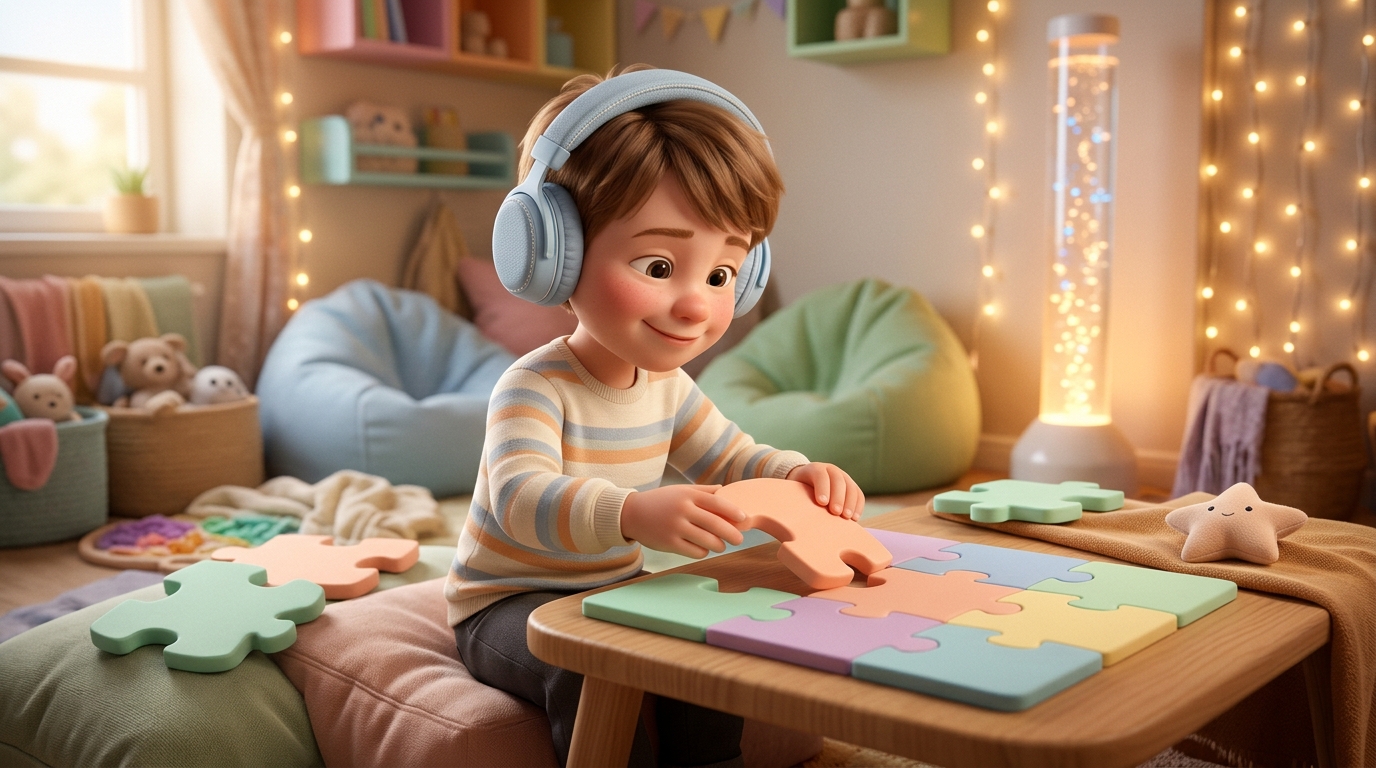
Designate a quiet corner of your classroom away from heavy foot traffic. Equip a low table with a comfortable beanbag chair, noise-canceling headphones, and a shallow wooden tray containing an ongoing 24- to 48-piece puzzle. When a student shows early signs of sensory agitation or emotional dysregulation, invite them to spend ten quiet minutes at the puzzle table. The rhythmic, visual focus resets their nervous system without the stigma of disciplinary time-outs.
Create custom, sensory-friendly puzzles tailored to your child's favorite themes today! Use PuzzleNest’s Free Jigsaw Puzzle Generator to transform soothing artwork and family photos into printable puzzles with custom piece counts!