Understanding the ADHD Brain: The Quest for Regulated Dopamine
Attention Deficit Hyperactivity Disorder (ADHD) is frequently misunderstood as a simple inability to pay attention. In reality, neuroscientists recognize ADHD as a disorder of executive functioning and dopamine regulation. The ADHD brain produces lower baseline levels of dopamine—the neurotransmitter responsible for motivation, sustained effort, and reward processing.
When faced with open-ended, ambiguous tasks (such as writing a five-paragraph essay or reading a dense textbook chapter), the ADHD brain struggles to engage because the delayed reward feels nonexistent. Conversely, high-stimulation digital screens deliver rapid, intense dopamine spikes that can lead to hyper-focus followed by sensory burnout. Printable paper puzzles occupy the sweet spot between these two extremes: structured, low-dopamine tasks with clear boundaries and immediate, earned cognitive rewards.
1. Why Puzzles Work: The Power of Clear Boundaries
Open-ended school assignments often trigger anxiety and task paralysis for neurodivergent learners because there is no obvious starting point or clear boundary of completion. A puzzle, by contrast, provides an inherently structured, safe sandbox:
- Explicit Rules: In Sudoku, numbers 1 through 6 cannot repeat. In a maze, you cannot cross walls. In a word search, the letters are locked in a grid. These unambiguous parameters remove cognitive friction and eliminate guesswork.
- Continuous Micro-Wins: Finding a single word, placing a single number, or navigating past a tricky junction provides an immediate, healthy dopamine micro-burst. This regular trickle of accomplishment keeps the ADHD brain engaged and motivated without hyper-arousal.
- Definitive Completion: A puzzle is either solved or in progress. There is no ambiguous grading scale or subjective interpretation, giving the learner absolute closure.
"Puzzles provide neurodivergent children with something the noisy world rarely offers: clear borders, predictable rules, and an undeniable sense of mastery."
2. Strengthening Executive Function and Working Memory
Executive functioning encompasses working memory, impulse control, cognitive flexibility, and strategic planning—all areas where children with ADHD often benefit from targeted scaffolding. Puzzles act as a gentle gym for these mental muscles:
- Working Memory: Holding a 4-letter word in mind while scanning horizontal and vertical letter rows strengthens active retention buffers.
- Impulse Control: Preventing oneself from rushing into a maze path without scanning ahead trains inhibitory control—the exact neurological mechanism needed to resist classroom interruptions.
- Cognitive Flexibility: When a Sudoku number placement creates a contradiction, the child must gracefully pivot, erase the number, and reconsider alternate possibilities.
3. Practical Tips for Parents and Special Educators
- Use Visual Highlighters: Allow children with ADHD to use neon gel pens, highlighters, or colored pencils. Color enhances visual discrimination and sustains interest.
- Implement Short Time-Boxes: Set a friendly visual timer for 10 or 15 minutes. Emphasize that the goal is calm engagement rather than frantic speed.
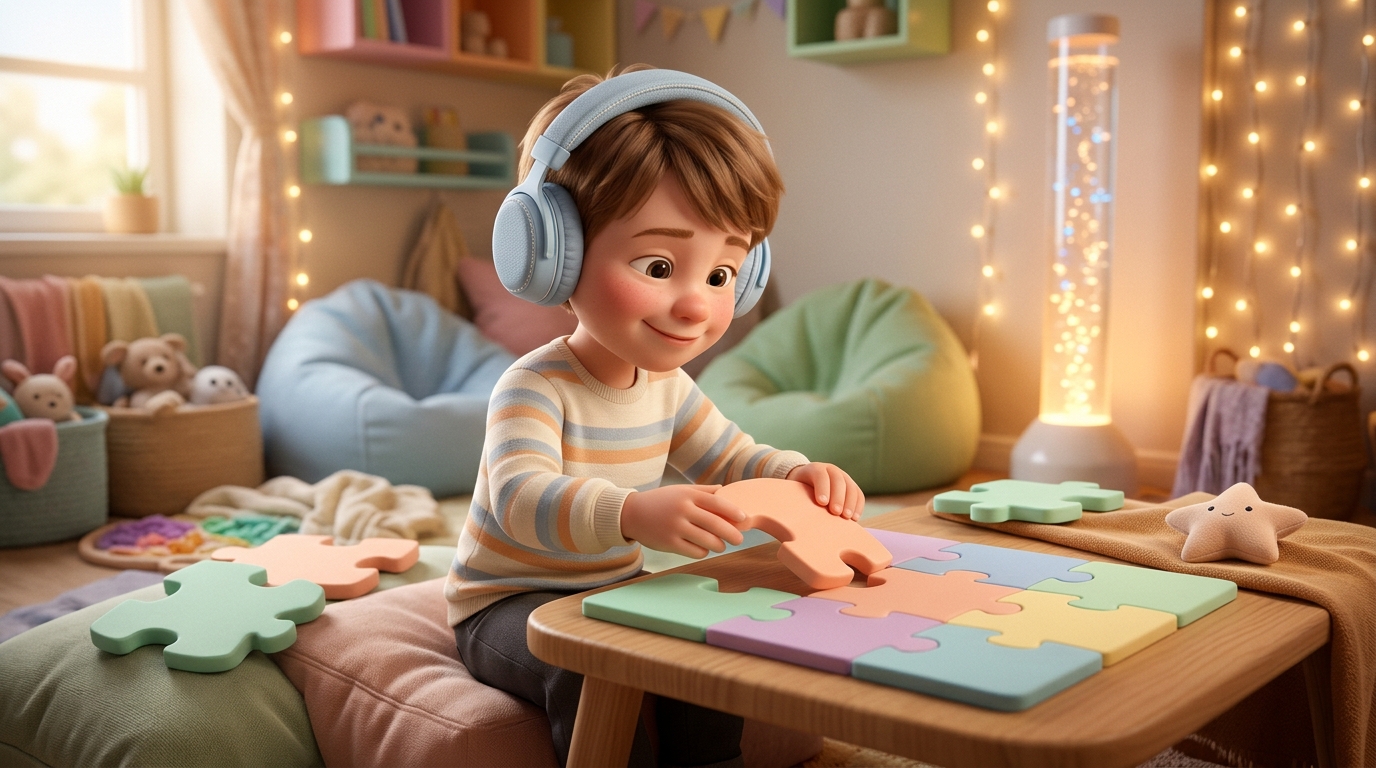
- Offer Fidget-Friendly Environments: Allow kids to solve puzzles while standing at a counter, sitting on a balance ball, or wearing noise-canceling headphones.
- Celebrate the Process: Praise persistence over completion: "I noticed how patiently you searched for that difficult word!"
Explore PuzzleNest’s collection of customizable, print-ready Educational Puzzles designed with crisp layouts and intuitive rules to support every learner's unique brain!