Dual-Coding Theory in Action: Why Pictures Supercharge Early Reading Recall
For children in preschool, kindergarten, and first grade, the journey of learning to read can feel like decoding a baffling secret code. Abstract squiggles on paper like 'b', 'd', 'p', and 'q' look virtually identical to developing eyes. When early literacy instruction relies solely on black-and-white text drills, young brains work in an exhausting cognitive overdrive.
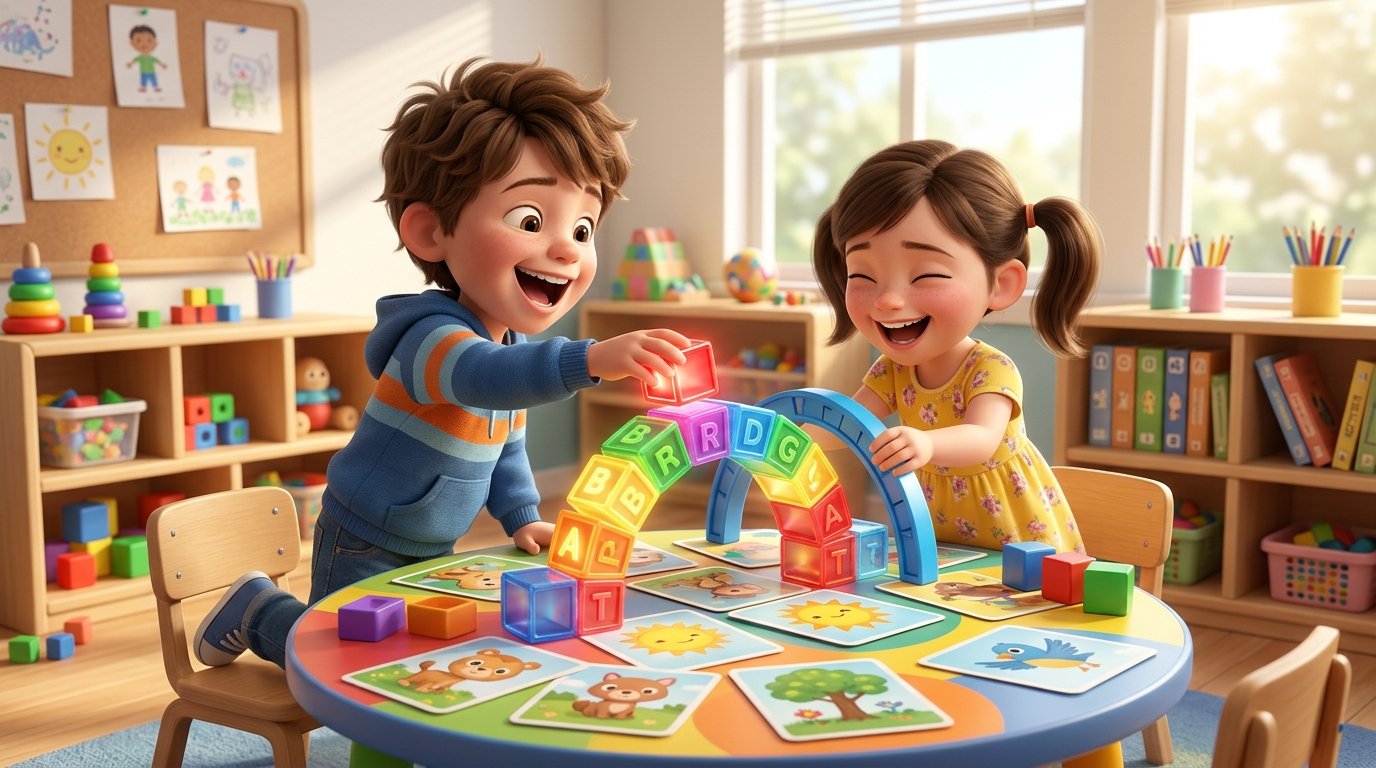
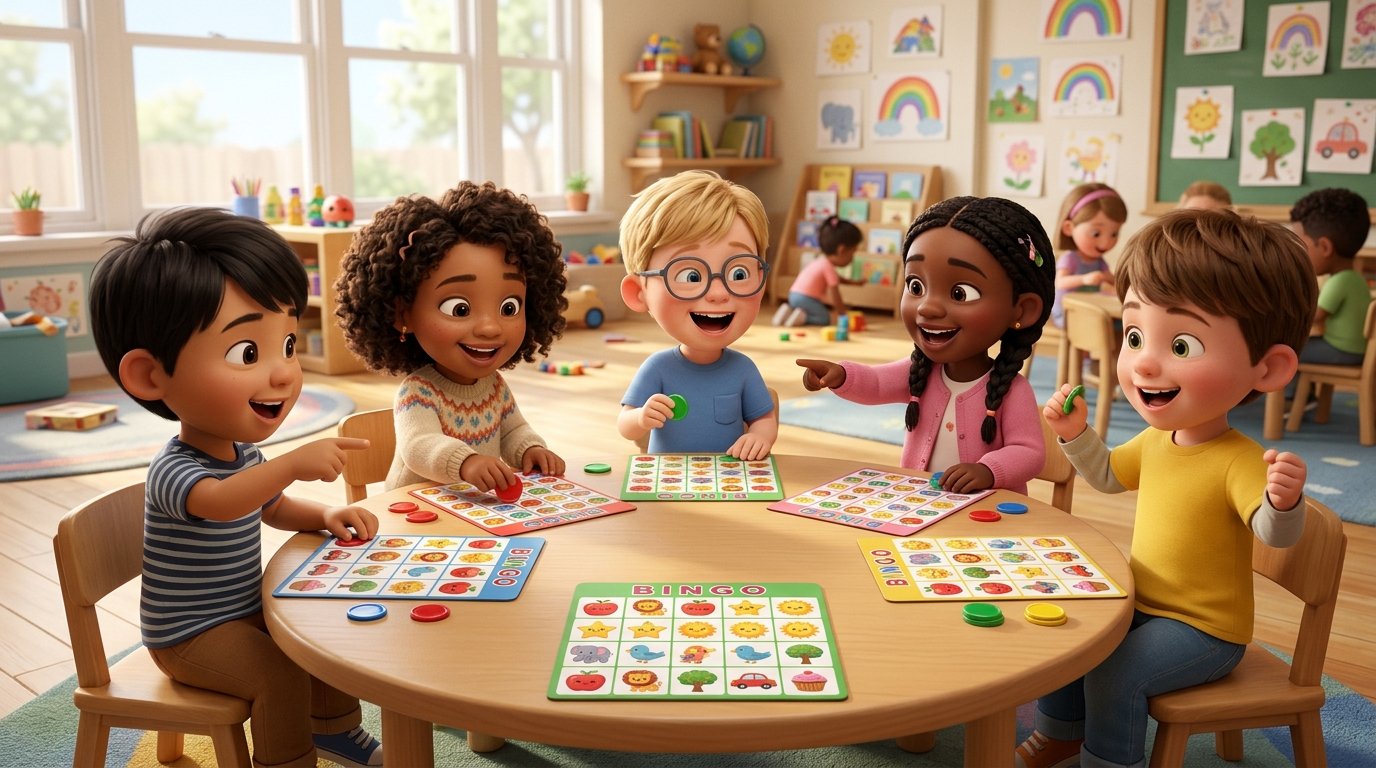
According to cognitive psychologist Allan Paivio's renowned Dual-Coding Theory, the human brain processes visual imagery and verbal text through two distinct, parallel neurological channels. When information is presented simultaneously as both a verbal word and a vivid picture, learning retention improves dramatically because two separate memory traces are stored in the brain. A picture bingo card generator harnesses dual-coding theory to transform phonics and vocabulary practice into a high-energy, joyful visual game where every young learner can shine.
1. The Anatomy of an Early Literacy Bingo Card: 3x3 vs. 4x4 vs. 5x5 Grids
Choosing the right grid dimension is essential to prevent cognitive overload in young players:
- 3x3 Grid (9 Squares): The gold standard for toddlers, preschool, and early kindergarten. With only 8 pictures and 1 central Free Space, young children can easily scan all options without losing focus. Games last 3 to 5 minutes, allowing multiple quick winning rounds.
- 4x4 Grid (16 Squares): Ideal for late kindergarten and first grade. Accommodates a robust pool of 20 to 25 vocabulary words, requiring more strategic visual scanning while maintaining high game momentum.
- 5x5 Grid (25 Squares): Best for second grade and above, or for whole-classroom spelling and math review with larger vocabulary sets.
2. 5 Engaging Phonics & Sight Word Game Variations
Keep your early literacy stations fresh and thrilling with these five pedagogical gameplay variations:
- Initial Sound Match: Instead of calling out the object's name, the teacher produces only the target phoneme: "/m/ /m/ /m/ as in monkey!" Children scan their cards for pictures starting with the /m/ sound (milk, moon, mitten), bridging phonemic awareness to graphemes.
- Rhyming Scavenger Hunt: The caller announces: "Find a picture that rhymes with CAT!" Children locate the friendly picture of a BAT or HAT on their cards. Rhyme detection is one of the strongest statistical predictors of future reading success.
- CVC Word Blending: For developing decoders, write simple Consonant-Vowel-Consonant words on the board (e.g., D-O-G). Children sound out the phonemes sequentially, blend them into a complete word, and cover the corresponding cartoon illustration.
- Category Sort Calling: The caller names a broad semantic category: "Cover a yellow fruit!" or "Cover an animal that swims in the ocean!" This reinforces classification, descriptive adjectives, and Tier 1 vocabulary.
- Scrambled Word Reveal: Display the scrambled letters of a familiar 4-letter word on your smartboard. As students solve the anagram, they verify whether that item appears on their individual bingo card!
3. Supporting ESL and Neurodivergent Students with Universal Visual Cues
Traditional verbal quizzes can be intimidating for English Language Learners (ELL) and children with speech delays. Picture bingo eliminates the affective barrier of verbal production. A newcomer student who cannot yet confidently pronounce "strawberry" in English can instantly recognize the bright red fruit, match it to the spoken word, and experience the pride of placing a token on their card.
Furthermore, because every bingo card generated on PuzzleNest is uniquely randomized, every student has an equal mathematical probability of winning. This randomness removes academic competition anxiety, fostering an inclusive classroom culture where celebrating a peer's victory feels natural and joyful.
4. Classroom Management: Reusable Lamination & Dry-Erase Tokens
To keep classroom preparation painless and eco-friendly:
- Laminate Full Sets: Run a set of 25 to 30 randomized cards through thermal laminating pouches. Laminated cards survive hundreds of classroom games and wipe clean instantly.
- Tactile Manipulative Markers: Instead of single-use paper daubers, use colorful counting bears, unifix math cubes, dried lima beans, or large magnetic chips paired with a magnetic wand for a thrilling "clean-up sweep" at the end of each round!
- Dry-Erase Markers: Allow children to draw smiley faces or checkmarks directly on laminated cards using washable dry-erase markers.
5. Home Schooling and Family Night Adaptations
Picture bingo is not just for school—it is a fantastic family night tradition. Print customized sets for birthday parties, family holiday gatherings, or long road trips where children spot roadside landmarks (cows, bridges, red barns, wind turbines) out the car window to fill their travel bingo sheets!
Start Creating Picture Bingo Cards Now
Empower your earliest readers to build lasting phonics confidence through the irresistible magic of visual gameplay.
Generate, scramble, and print unlimited custom picture and word bingo cards in seconds with PuzzleNest's Free Bingo Card Generator!