The Missing Executive Link: Turning Organizational Chaos into Structured Play
Open the backpack of almost any fifth or sixth grader with Attention-Deficit/Hyperactivity Disorder (ADHD) or executive dysfunction, and you are likely to witness a familiar phenomenon: crumpled worksheets compressed at the bottom of the bag, missing assignments that were completed but never turned in, and five identical half-used spiral notebooks with ripped covers.
Well-meaning educators and parents often respond with lectures: "You just need to put things in their folders!" or "Why can't you keep your backpack clean?" However, neuroscience reveals that spatial and procedural organization are complex, high-level prefrontal cortex functions. For a child with lagging executive skills, an unorganized binder is not a sign of laziness; it is a symptom of cognitive overload. By transforming material organization into interactive puzzle scavenger hunts, we can scaffold these vital life skills into automatic, joyful routines.
1. Cognitive Load Theory and the Chromatic Visual System
The human brain processes visual color before it decodes written text. When a student must search through five monochrome black folders labeled in pencil, their working memory must execute serial visual searches: reading each label, evaluating whether it matches the current subject, and discarding false positives. In a bustling, noisy classroom transition, this creates severe cognitive fatigue.
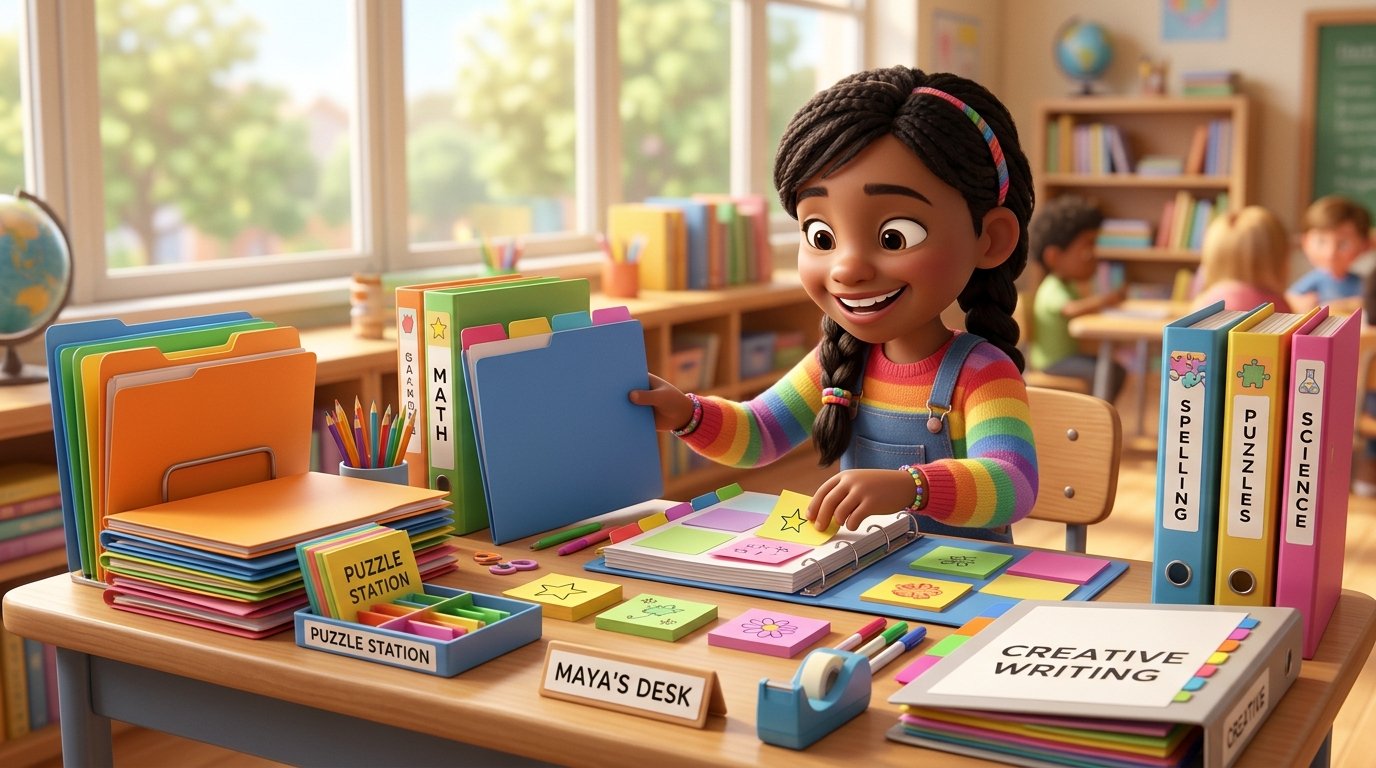
By implementing a strict cross-modal color-coding system, material retrieval shifts from effortful reading to instantaneous optical recognition:
- Mathematics = Red: Red folder, red binder section, red notebook, and red highlighter.
- Language Arts = Blue: Blue folder, blue reading journal, blue post-its.
- Science = Green: Green binder divider, green laboratory checklist.
- Social Studies = Yellow: Yellow history timeline, yellow binder tab.
When the visual environment is standardized, a student can identify their math materials in less than 200 milliseconds, preserving precious working memory for actual classroom learning.
2. Gamified Binder Scavenger Hunts
Rather than conducting stressful backpack inspections, pediatric occupational therapists recommend running periodic 5-Minute Binder Escape Quests:
- The Lightning Retrieval Challenge: The teacher calls out: "You are an archaeologist escaping a collapsing tomb! You have 30 seconds to locate your Green Science Lab Notes from Tuesday without dropping a single paper!" Students race against a countdown timer to test their retrieval systems.
- The Mystery Code Audit: Place secret three-digit numbers or colored stamps on key milestone handouts inside their binder pockets. Students solve a crossword or logic puzzle whose answers depend on locating those stamped numbers inside their own organized binders.
- The 3-Pocket Triage Rule: Every binder features three clear front pockets labeled with tactile symbols: "Inbox" (papers received today), "Action Required" (tonight's homework), and "Archive" (graded work ready for filing).
3. Building Enduring Habit Loops
Executive habits are built through predictable environmental cues and immediate sensory reinforcement. Consider establishing these three classroom practices:
- The Friday Cleanout Ritual: Set aside the final 10 minutes of Friday afternoon for a "Backpack Reset Party." Play upbeat music, provide recycling bins, and award silly badges or stickers for the cleanest desktop and most organized binder.
- Visual Anchor Schedules: Attach laminated visual checklists to the inside cover of student binders. Students use dry-erase markers to check off materials before closing their bags at the end of the day.
- Peer Accountability Duos: Pair students as "organization flight crew co-pilots." Partners spend two minutes cross-checking each other's homework planners and binder pockets to ensure all flight checklists are green for takeoff.
From Frustration to Lifelong Self-Efficacy
Mastering personal organization provides students with far more than tidy desks; it delivers profound emotional relief. When a child realizes they never have to experience the panic of a lost assignment again, their self-confidence surges. Organizational mastery is the ultimate gift of independence.
Download PuzzleNest's free Executive Functioning Daily Trackers, Visual Schedules, and Routine Checklists to build calm, structured learning environments today!