The Ancient Pedagogy of Moksha Patam: From Moral Philosophy to Modern Mathematics
Few tabletop games boast a pedigree as rich or widespread as Snakes and Ladders. Originating in ancient India under the Sanskrit name Moksha Patam (or Paramapada Sopanam), the game was originally created not merely as an idle pastime, but as a profound philosophical tool to teach moral virtues and karmic cause-and-effect. Ladders represented virtues like generosity, faith, and patience that elevated the soul, while snakes represented vices like anger, greed, and arrogance that caused a downward fall.
When the game was introduced to Victorian England in the 1890s and later popularized in North America as Chutes and Ladders, much of the overt philosophical symbolism was simplified into a pure roll-and-move race. Yet within modern elementary classrooms, progressive educators are rediscovering the incredible pedagogical architecture of this centuries-old game. With an online custom Snakes and Ladders board maker, teachers and parents can effortlessly repurpose the 100-square grid to reinforce early numeracy, mental arithmetic, reading fluency, and social-emotional resilience.
1. Number Line Fluency: Reinforcing 1–100 Boustrophedon Scanning
In early childhood cognitive development, mastering the mental number line is the single most vital prerequisite for future arithmetic fluency. A child must understand that numbers are not static symbols, but sequential spatial distances:
- Boustrophedon Layout (Snaking Rows): A standard 10x10 Snakes and Ladders board starts at 1 in the bottom-left corner, advances horizontally to 10 on the right, then turns upward to row 11–20 moving right-to-left. This alternating bidirectional layout mimics ancient reading inscriptions (boustrophedon, literally "as the ox turns when plowing").
- Decade Transitions: Navigating the turn from 20 to 21 or 40 to 41 forces children to understand base-ten structure. They physically count "one, two, three" as they move their game piece, verifying that adding numbers physically advances them higher up the vertical board.
2. Customizing Squares for Curricular Targets: Math & Phonics
The true power of a custom board generator is the ability to print custom text, equations, or illustrations inside individual grid squares:
- Multiplication & Skip Counting: Label squares with times-table challenges (e.g., Square 24 asks "What is 6 x 4?"). Players must solve the equation correctly before securing their token on the square.
- Sight Word Decoding: Populate squares with early reading sight words (there, which, because, where). Children read the word aloud to their game partner upon landing.
- Science & Nature Trivia: Design an animal adaptation or solar system board where landing on Mars provides a planetary fact, while an asteroid hazard acts as a cosmic snake sliding the player back to Earth!
3. Social-Emotional Learning (SEL): Teaching Resilience and Coping with "Snake Slides"
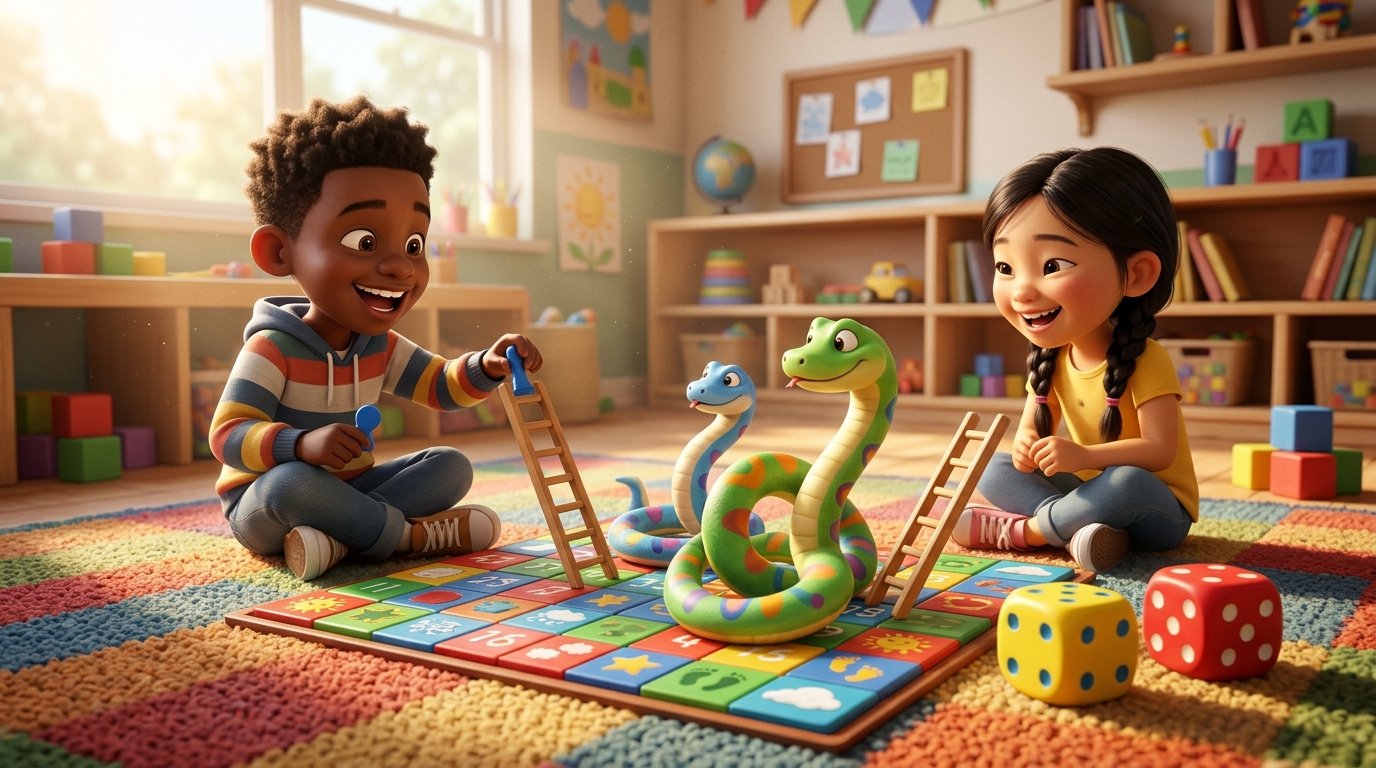
Beyond academic skills, Snakes and Ladders provides an unmatched laboratory for Social-Emotional Learning (SEL). Consider what happens when an enthusiastic six-year-old rolls a die, lands on square 87, and slides all the way down a giant snake to square 24. For a young child, this sudden reversal can trigger real frustration, anger, or tears.
"Board games provide an emotionally safe sandbox for practicing emotional regulation. Learning to take a deep breath, smile at a snake slide, celebrate a friend's ladder climb, and wait patiently for the next turn builds lifelong psychological grit."
Teachers can incorporate explicit SEL prompts directly onto squares: "Square 36: Name a time you showed kindness to a classmate (Climb the ladder!)" or "Square 72: Take two calming belly breaths before continuing."
4. Designing Themed Classroom Boards
Children's imaginations ignite when game mechanics are paired with immersive storytelling themes:
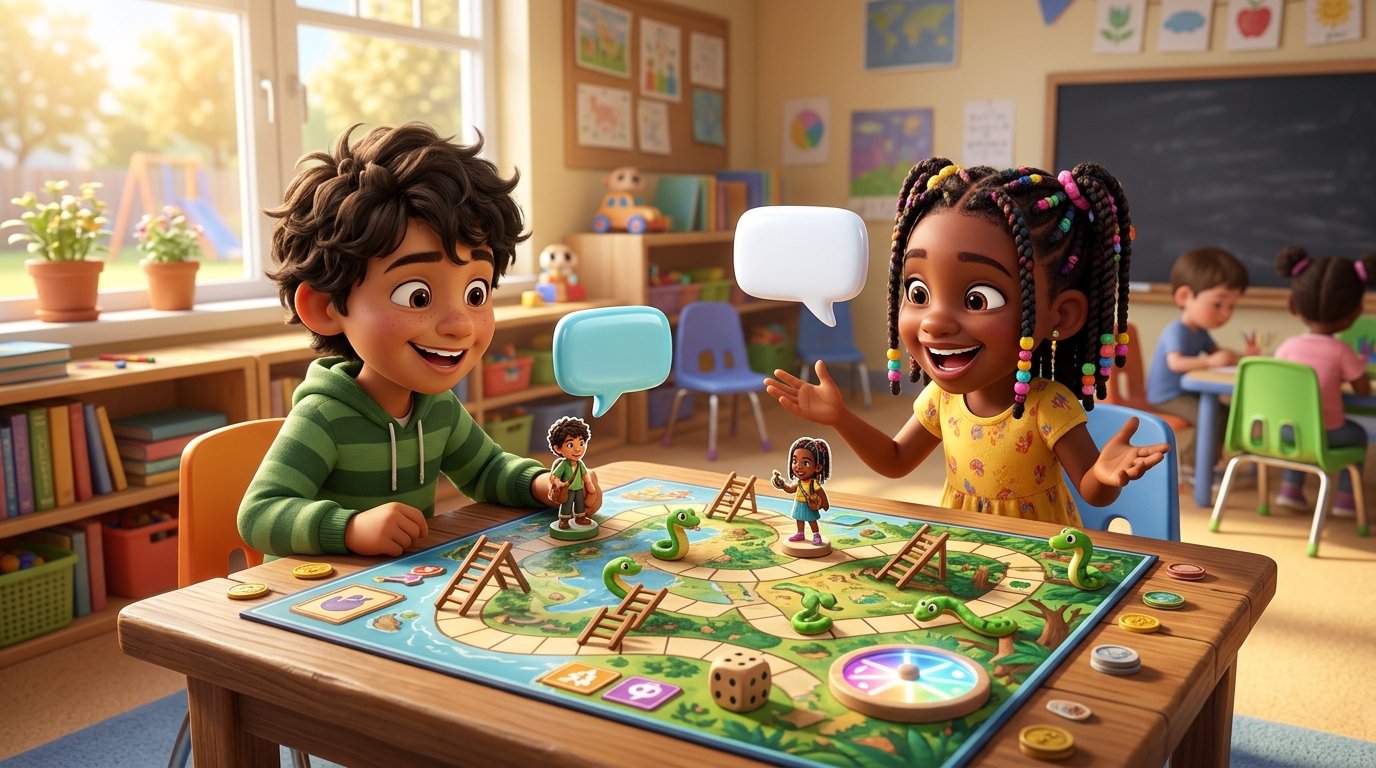
- The Rainforest Canopy Expedition: Ladders are towering Kapok vines; snakes are playful emerald tree boas. Students navigate from the dark forest floor up to the sun-drenched emergent layer.
- The Medieval Castle Siege: Climb siege ladders over the castle parapet while dodging slippery moat dragons.
- The Human Digestive Journey: A hilarious, memorable biology review board tracing nutrients from the mouth down to the stomach and intestines!
5. DIY Board Printing, Laminating, and Token Customization
To produce durable classroom sets that withstand years of recess and math station play:
- Large Format 11x17" Printing: Print your generated board across an 11x17" ledger sheet, or print two 8.5x11" halves and tape the center seam on the back with durable book-binding cloth tape to create an authentic folding game board.
- Lamination: Run boards through a 5-mil laminator. Laminated boards can be written on with wet-erase markers to change numbers or add student names dynamically.
- Custom Tokens: Let students personalize miniature plastic figurines, colorful math counting bears, or wooden meeples with their initials using fine-tip permanent markers.
Build Your Custom Board Game Today
Turn abstract counting and fact drills into a high-energy tabletop adventure that children will beg to play again and again.
Customize, preview, and print your own custom board games in seconds on PuzzleNest's Free Snakes and Ladders Generator Online—100% free with instant PDF export!