The Heartbeat of All Software: Making Decisions in Code
When most people think of computer coding, they picture dizzying lines of syntax filled with curly braces, semicolons, and complex equations. But stripped of its cosmetic syntax, every computer program ever written—from a basic microwave timer to a billion-dollar self-driving car algorithm—is built on one fundamental cognitive primitive: conditional decision-making.
In computer science, this is known as the If-Then-Else statement: IF a condition is true, execute Action A; ELSE (if the condition is false), execute Action B. While young children make hundreds of subconscious conditional choices every day ("IF it is raining, I wear my boots; ELSE I wear my sneakers"), visualizing formal algorithmic flowcharts on paper often causes confusion. By transforming conditional logic into playable flowchart mazes, educators make algorithmic thinking concrete, visual, and delightfully intuitive.
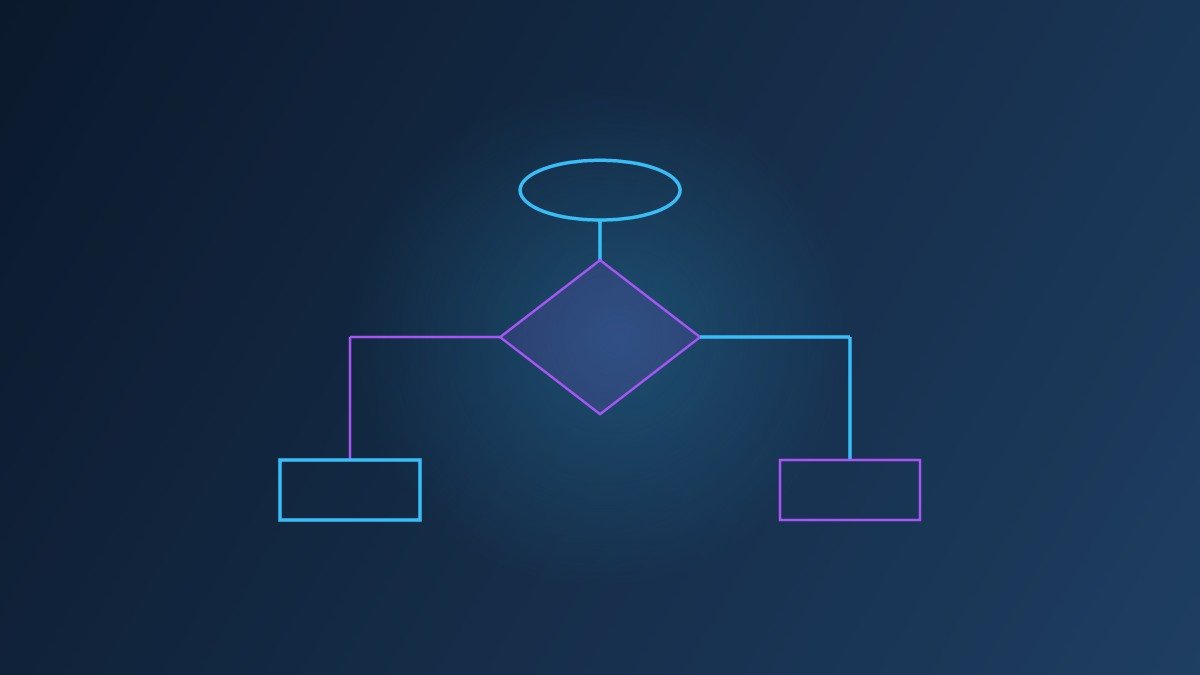
1. Standard Flowchart Symbology Made Playful
Introduce elementary students to standard ISO software engineering flowchart symbols through tactile shape metaphors:
- The Oval (Start / End Node): The entrance gate and final victory exit of the maze.
- The Rectangle (Process / Action Step): A simple, unconditional instruction: "Walk forward 3 steps," "Collect 1 gold coin," or "Turn 90 degrees left."
- The Diamond (The Decision Junction - Condition): The crucial crossroads! Contains a clear boolean question that evaluates strictly to TRUE (Yes) or FALSE (No): "Do you have a bronze key?" One path leads to the treasure door; the other path loops back to the dungeon!
- The Loopback Arrow (Iteration): A path that circles back to an earlier node, visually demonstrating While Loops and Repeat-Until conditions.
2. Designing Interactive "Robot Avatar" Flowchart Mazes
Transform the classroom rug or a printable paper worksheet into an interactive algorithmic quest:
- The Inventory Token System: Students navigate a game board while holding a small dry-erase card tracking their "State Variables":
Health = 10,Coins = 0,HasMagicWand = False. - Navigating Conditional Gates: As the player avatar arrives at Diamond Node 1, the card reads:
IF Coins >= 5 THEN take Path A ELSE take Path B. If the student lacks coins, they are forced down the obstacle path to earn more currency, directly experiencing programmatic flow control! - The Nested Conditional Dungeon: Advanced middle school mazes feature nested if-statements:
IF isDragonAsleep == True THEN (IF hasInvisibilityCloak == True THEN SneakPast ELSE CastSilenceSpell) ELSE FleeToDungeon. Students map out truth tables to ensure all edge cases are safely handled.
3. Why Algorithmic Logic Sharpens General Critical Thinking
Training children in conditional flowchart navigation delivers far-reaching cognitive dividends beyond computer programming:
- Scientific Hypothesis Formulation: Scientific experiments follow identical conditional logic: "IF the water temperature increases, THEN the rate of chemical reaction will accelerate."
- Emotional Self-Regulation (If-Then Coping Plans): Pediatric psychologists widely recommend If-Then implementation intentions for emotional regulation: "IF I feel my anger rising above a 7, THEN I take 3 deep labyrinth breaths; ELSE I continue playing."
- Rigorous Grammar Analysis: Complex sentence syntax and punctuation follow clear conditional rules (e.g., "IF the dependent clause begins the sentence, THEN add a comma; ELSE do not.").
Empowering the Thinkers of the Digital Age
In a world increasingly driven by artificial intelligence, machine learning, and automated decision engines, understanding the logic that governs algorithms is an essential literacy. When children master conditionals through playful flowchart mazes, they cease to be passive consumers of technology and become confident, empowered algorithmic creators.
Generate printable Flowchart Mazes, Algorithmic Decision Trees, and Unplugged Coding Worksheets on PuzzleNest today!