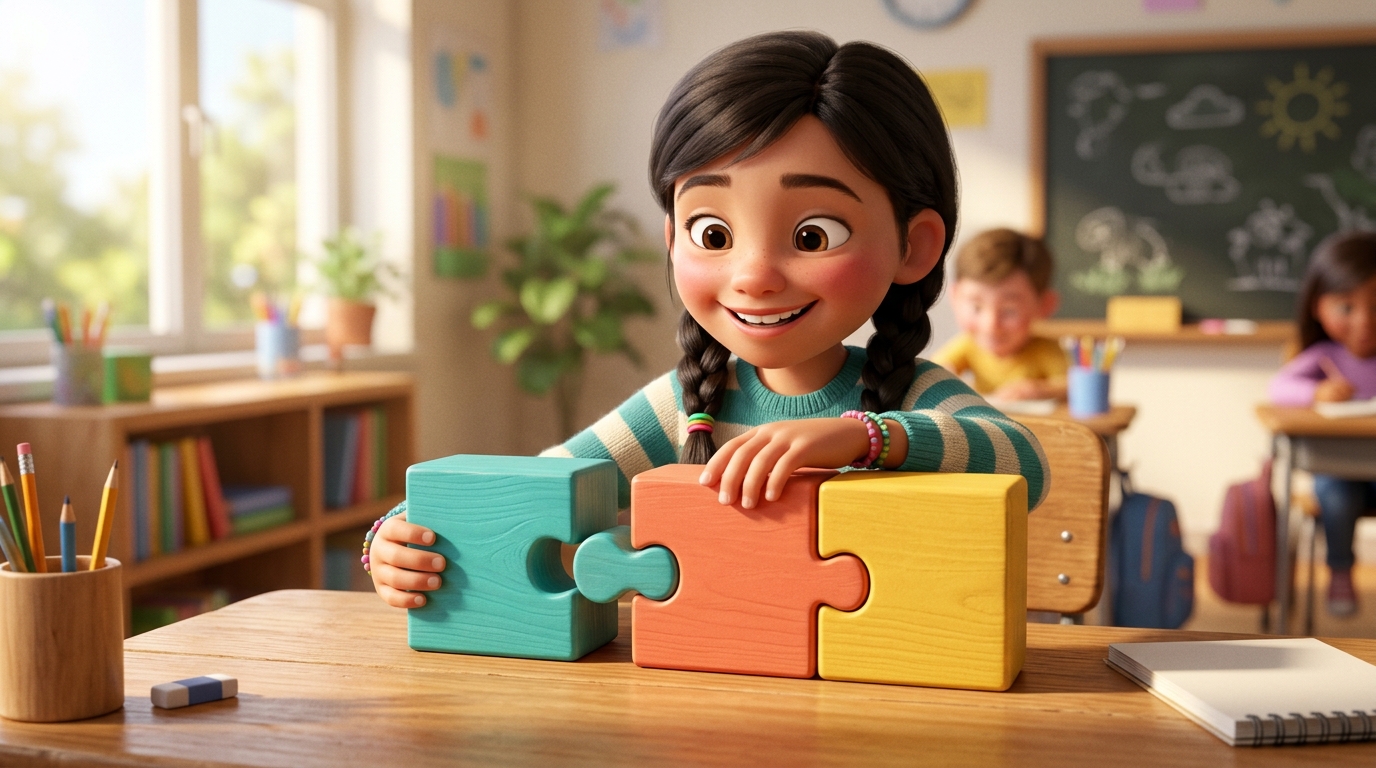
The Magic of Word Equations: When 1 + 1 = A Brand New Word
One of the most thrilling developmental milestones in early reading occurs when a child realizes that words are not impenetrable, static monoliths, but modular building blocks that can snap together to create entirely new meanings. When a child combines the familiar word sun with the word flower to produce sunflower, or connects butter and fly to form butterfly, reading suddenly feels like an inventive superpower.
Teaching compound words through tactile split-tile puzzles and visual word-equation worksheets provides emergent readers with an accessible on-ramp to multisyllabic reading. By physically joining two distinct semantic units together, young learners grasp the foundational mechanics of orthographic mapping, decoding fluency, and vocabulary expansion without intimidation.
1. Why Compound Words Are the Gateway to Multisyllabic Fluency
Emergent readers who are comfortable decoding simple 3-letter CVC words (like cat, pan, or bed) often freeze in panic when they encounter an 8- or 9-letter multisyllabic word in a storybook. The visual length of the word triggers cognitive overload, causing the child to guess randomly based on initial consonants.
Compound words demystify long words because they are composed of two smaller, highly familiar root words that the child already knows how to read. Breaking a daunting word like pancake into pan and cake teaches the vital reading strategy known in the Science of Reading as chunking. Once a child learns to spot smaller familiar units embedded within larger words, their reading stamina and decoding accuracy multiply exponentially.
2. The Visual-Spatial Architecture of Split-Tile Puzzles
Traditional literacy worksheets ask students to draw a straight pencil line connecting words from Column A to Column B. While functional, this lacks tactile and spatial engagement. Self-correcting split-tile puzzles introduce a dynamic tactile element:
- Unique Interlocking Puzzle Tabs: Each root word tile is die-cut with a unique interlocking puzzle tab and notch that only fits its correct partner (e.g., the rain tile only snaps into the bow tile, preventing incorrect combinations).
- Dual Picture-Text Reinforcement: Each tile features both the printed word and a clear illustration. When rain (showing raindrops) snaps into bow (showing a colorful ribbon), the combined tile flips over to reveal a radiant rainbow across the sky.
- Color-Coded Semantic Categories: Grouping compound words by themes (nature, food, household objects) provides supportive scaffolding for ESL learners and struggling readers.
"When a young child snaps two word tiles together and watches a brand new compound word emerge, they are experiencing the foundational magic of human language."
3. Exploring Literal vs. Figurative Compound Words
As children gain confidence with simple compound words, introduce an exciting linguistic distinction that deepens semantic comprehension:
- Transparent (Literal) Compounds: Words whose combined meaning is the direct sum of their parts (e.g., a bookshelf is literally a shelf for books; a snowman is literally a man made of snow; a cupcake is literally a small cake baked in a cup).
- Opaque (Metaphorical) Compounds: Words where the meaning has evolved beyond its literal roots into figurative territory (e.g., a butterfly is not made of butter, nor does it fly like butter; a dragonfly is not a miniature dragon; a hotdog has no connection to canines!).
Inviting young students to analyze why these words have their names sparks delightful classroom laughter, critical semantic inquiry, and creative thinking.
4. Four High-Impact Early Literacy Classroom Activities
- The Compound Word Equation Mat: Provide students with printable equation strips formatted like math problems: [ Word Tile 1 ] + [ Word Tile 2 ] = [ New Compound Word ]. Students manipulate physical cardstock tiles to build equations on their desks.
- Classroom Scavenger Hunt Duels: Hide first-half word cards around the classroom. Give each student a second-half card. Students must walk around reading cards to locate their matching linguistic partner.
- Silly Compound Inventions: Have students combine two unrelated cards (e.g., moon + cookie → mooncookie) and draw an imaginative picture of what this newly invented object would look like and do.
- Compound Word Domino Chains: Create dominoes where the right half matches a word that forms a compound word with the left half of the next domino (e.g., sun / flower → flower / pot → pot / hole), building long, winding language caterpillars across the floor.
Download our free printable Compound Words Split-Tile Puzzles & Phonics Activity Packs on PuzzleNest to inspire early reading breakthroughs today!