The Musical Architecture of the Spoken Word
When proficient readers encounter an unfamiliar multisyllabic word in text—such as catastrophic or investigate—they do not sound it out letter by agonizing letter. Subconsciously and effortlessly, their brain divides the word into its constituent rhythmic beats: syllables. A syllable is the acoustic heartbeat of human speech, organized around a single resonant vowel sound.
For struggling readers and students with dyslexia, however, long printed words frequently blur into an undifferentiated wall of consonants and vowels. Acoustic phonics puzzles harness the brain's innate musical processing centers to bridge this gap. By linking orthographic syllable division rules with physical rhythm claps, percussion beats, and visual meter puzzles, children master the architecture of multisyllabic reading with joyful musical flow.
1. The Six Syllable Types Explained Simply
In the Science of Reading framework, English orthography is governed by six fundamental syllable types. Knowing these types allows a child to accurately predict whether a vowel makes its short or long sound:
- Closed Syllables (CVC): The syllable ends in a consonant, locking the vowel into its short sound (e.g., nap-kin, pic-nic).
- Open Syllables (CV): The syllable ends in a vowel, allowing the vowel to shout its long name (e.g., ti-ger, ro-bot, mu-sic).
- Vowel-Consonant-e (VCe): A silent 'e' at the end makes the preceding vowel long (e.g., pan-cake, rep-tile).
- R-Controlled (Bossy R): An 'r' follows the vowel, warping its sound (e.g., cir-cus, gar-den).
- Vowel Teams (Diphthongs & Digraphs): Two vowels collaborate to create a specific sound (e.g., rain-bow, boat-man).
- Consonant-le (Cle): Found at the end of words with a schwa beat (e.g., can-dle, pud-dle).
2. Rhythm-Meter Crosswords: Clapping the Syllable Beat
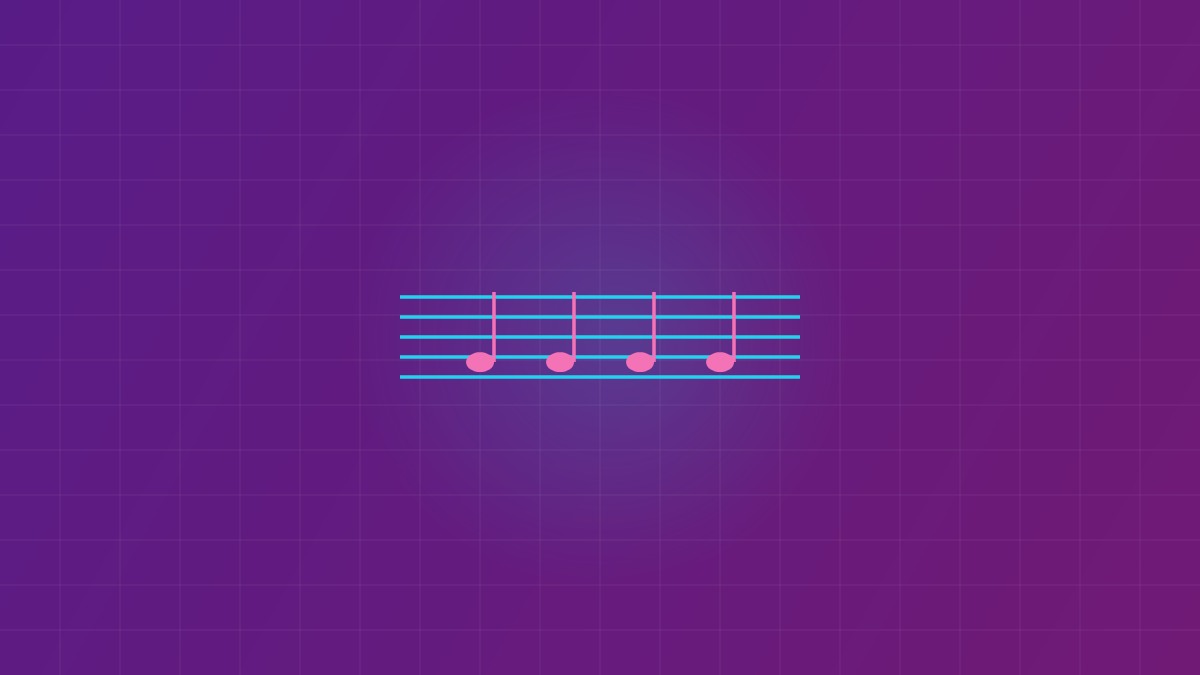
Traditional phonics worksheets ask students to place arbitrary slash marks through words on a page. Acoustic Phonics Puzzles turn syllable counting into musical notation. Words are categorized on puzzle grids by their rhythmic meter:
- 1-Beat Monosyllables (Quarter Note): sun, jump, bright, cloud
- 2-Beat Trochees (STRONG-weak): doc-tor, mon-key, pen-cil (the standard rhythm of English!)
- 2-Beat Iambs (weak-STRONG): gui-tar, be-tween, gi-raffe
- 3-Beat Dactyls (STRONG-weak-weak): el-e-phant, mu-si-cal, his-to-ry
As students solve the crossword, they physically tap rhythm sticks or clap their hands, validating their answers through auditory-motor feedback before writing them into the grid.
"Language is music before it is written code. When children feel the rhythmic pulse of syllables in their hands, decoding on paper becomes effortless melody."
3. Taming the Elusive Schwa with Rhythmic Stress Puzzles
The single most common vowel sound in the English language is the schwa ($partial$)—the lazy, unaccented, relaxed "uh" sound found in unstressed syllables (like the 'a' in banana, the 'o' in lemon, or the 'e' in camel). The schwa is the number one cause of elementary spelling errors because it disguises the true vowel identity.
Acoustic phonics puzzles demystify the schwa by highlighting lexical stress. When children mark the accented "loud" syllable with a musical drumbeat icon and the unaccented "quiet" syllable with a whisper symbol, they understand why unstressed vowels relax into a schwa. This structural awareness dramatically boosts spelling accuracy and reading expression.
4. Four High-Energy Acoustic Phonics Classroom Games
- The Syllable Drum Circle: Give students percussion instruments (tambourines, hand drums, rhythm shakers). The teacher calls out complex academic vocabulary; students drum the exact syllable beat pattern before segmenting the word on their whiteboards.
- Syllable Karate Chop Mats: Students receive printed compound and multisyllabic words on paper strips. With a loud, playful martial-arts shout, they physically chop the paper strip between syllables with scissors, identifying whether the resulting halves are open or closed syllables.
- Rhythm-Match Bingo: The teacher calls out a rhythm beat (e.g., CLAP-clap-clap). Students scan their bingo cards to locate words that share that exact 3-syllable meter (like hospital or dinosaur).
- Syllable Scramble Race: Lay out dozens of isolated cardstock syllables on the floor. Student teams race against a stopwatch to assemble valid 3- and 4-syllable words and read them aloud with proper stress.
Unlock multisyllabic reading fluency with PuzzleNest's free printable Acoustic Phonics & Syllable Division Worksheets today!