The Power of Thinking Without Words
In standard academic testing, verbal fluency and linguistic memory are heavily emphasized. Standardized reading assessments measure vocabulary breadth and syntactic comprehension. However, developmental neuropsychologists know that language represents only one channel of intellectual ability. A child's capacity to recognize abstract patterns, identify hidden relationships, and solve novel problems without relying on language is known as Non-Verbal Intelligence—often referred to in psychometrics as Fluid Intelligence (Gf).
Unlike crystallized intelligence, which represents acquired knowledge like historical dates or grammatical definitions, fluid intelligence represents raw problem-solving horsepower: the ability to analyze unfamiliar situations, deduce governing rules, and construct logical extrapolations. Matrix puzzles, shape Sudoku, and visual logic grids are the premier neurological training grounds for this vital cognitive capacity.
1. Understanding Matrix Reasoning and Raven's Principles
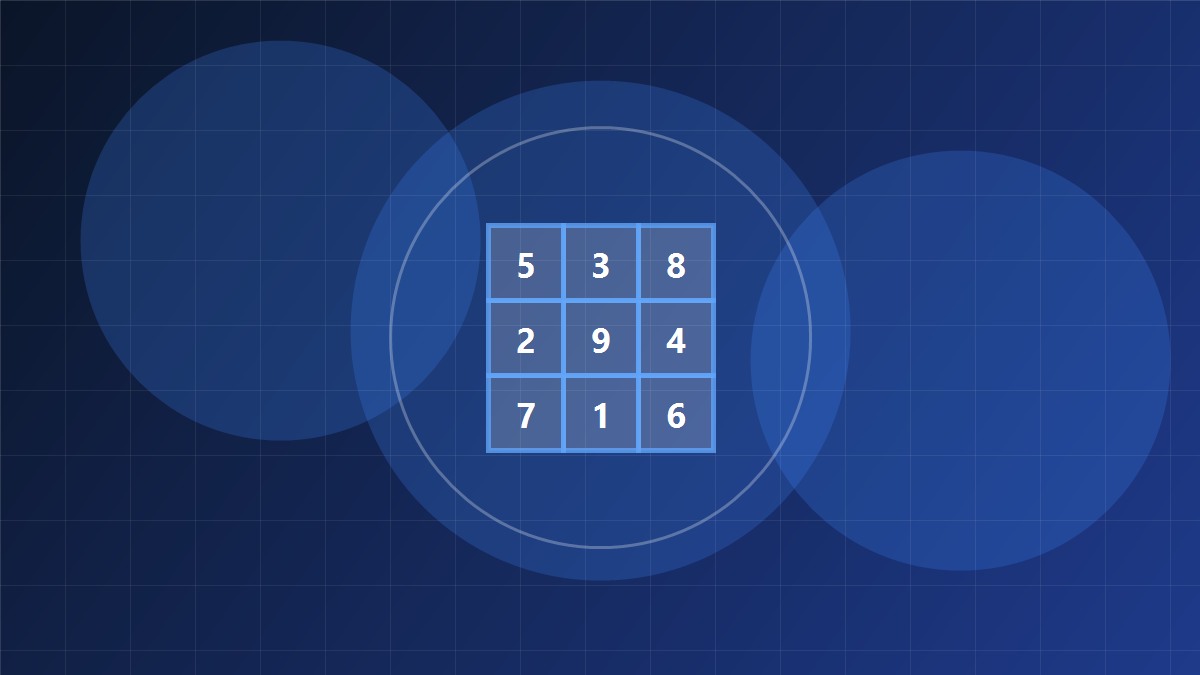
The gold standard for assessing non-verbal fluid intelligence is Raven's Progressive Matrices. In these evaluations, students are presented with geometric 3x3 matrices where eight cells contain evolving geometric patterns, and the final ninth cell is empty. The student must deduce the underlying transformations—such as progressive rotation, shape inversion, or progressive addition of elements—to choose the correct concluding piece.
When young learners regularly solve visual logic puzzles, they activate the dorsolateral prefrontal cortex and anterior cingulate cortex. These brain regions are responsible for:
- Rule Induction: Formulating an unstated hypothesis based on observed data (e.g., "Every time the circle moves one space clockwise, the star changes color").
- Simultaneous Multi-Parameter Tracking: Monitoring two or three independent variables concurrently (size, color, position) without becoming overwhelmed.
- Systematic Elimination: Rejecting tempting visual distractors that satisfy one condition but violate another.
"Fluid intelligence was once considered a fixed genetic trait. Modern neuroplasticity research proves that systematic practice with non-verbal logic grids directly expands working memory capacity and elevates cognitive performance."
2. Shape-Based and Miniature Sudoku as Non-Verbal Workouts
While classic Sudoku uses digits 1 through 9, those numbers carry zero mathematical value in the puzzle. They are merely distinct symbolic tokens. When Sudoku is presented to early elementary learners using shapes, colors, or letters, it strips away any residual "math anxiety" and highlights pure deductive logic.
In a 4x4 or 6x6 grid, students practice the fundamental logical rule of mutual exclusivity: if an element must exist in a row, and three of the four positions are occupied, the remaining open cell must contain the missing token. This binary truth-table thinking forms the exact conceptual foundation required for computer programming, formal logic proofs, and scientific troubleshooting.
3. Real-World Academic Transfer of Non-Verbal Skills
Strengthening non-verbal pattern recognition yields substantial academic dividends across multiple subjects:
- Reading Comprehension: Students learn to identify implicit narrative structure, thematic foreshadowing, and cause-and-effect sequences across paragraphs.
- Algebraic Readiness: Visualizing how geometric patterns change across steps prepares students intuitively for linear functions, coordinate graphing, and algebraic equations.
- Coding & Algorithmic Design: Programmers must mentally model abstract states, loop iterations, and conditional logic branches before writing code. Logic puzzles build this mental sandbox.
3 Daily Logic Rituals for Home and Classroom
Incorporate these simple non-verbal exercises into your routine:
- The Mystery Tile Warm-Up: Display a 3x3 grid with one missing symbol on your classroom projector. Have students sketch their answer on miniature whiteboards without saying a word, then share their deduction logic.
- Shape Sudoku Stations: Print 4x4 mini-grids with geometric symbols for morning bell-ringer work. Encourage students to explain their reasoning using the word "because".
- Tangram & Pattern Block Transformations: Challenge children to replicate complex silhouette outlines using standardized geometric tiles within timed 3-minute sprints.
Empower your child's logical reasoning today! Use PuzzleNest’s Free Sudoku Generator and Brain Teasers to generate printable logic worksheets calibrated for every age and skill level.