Breaking the Cycle of Math Anxiety in Elementary Learners
Step into an elementary or middle school classroom and ask students which subject causes them the greatest apprehension, and an overwhelming number will whisper a single word: mathematics. Math anxiety is a well-documented psychological phenomenon that can emerge as early as second grade. When math is presented solely through the lens of timed multiplication drills, high-stakes speed tests, and rigid algorithmic procedures, young minds experience genuine physiological stress. Heart rates rise, the amygdala triggers a stress response, and working memory—the very mental workspace required to process calculations—temporarily freezes.
Yet mathematics, in its purest form, is not about rote memorization or frantic speed. Math is the art of pattern discovery, spatial relationships, and the thrill of logical deduction. By replacing punitive drills with playful, visual math puzzles, educators and parents can systematically dismantle math apprehension and replace it with joyful curiosity and deep numerical confidence.
What is "Number Sense" and Why Do Visual Puzzles Build It Faster?
Traditional arithmetic instruction frequently emphasizes computational procedure over conceptual understanding. A student might memorize that 7 + 8 = 15 through flashcards, yet struggle to explain why, or freeze when asked to calculate 15 - 7 in a real-world scenario.
True mathematical fluency rests upon Number Sense—an intuitive understanding of number magnitude, flexible composition and decomposition, and the ability to mentally manipulate numbers in diverse ways. Visual puzzles cultivate number sense because they treat numbers not as static symbols to be memorized, but as flexible building blocks that can be partitioned, rearranged, and balanced. When children solve arithmetic puzzles, they intuitively develop mental shortcuts and structural insight that standardized worksheets can never replicate.
"Children do not inherently dislike mathematics; they dislike feeling rushed, judged, and bewildered. Visual puzzles give students the emotional safety to explore numbers playfully and build genuine mathematical intuition."
7 Essential Math Puzzle Frameworks Every Educator Should Use
Integrating these seven engaging puzzle styles into your home or classroom transforms arithmetic practice into an exhilarating mystery:
- 1. Mini Sudoku Grids (4x4 and 6x6): Introduce young learners to systematic logic, spatial reasoning, and deduction without the intimidation of calculations. By organizing digits 1 through 4 (or 1 through 6) across rows, columns, and quadrants, children master the fundamental mathematical habit of systematic elimination.
- 2. Inverted Number Pyramids: In a number pyramid, each brick represents the sum (or product) of the two bricks directly beneath it. These visual puzzles require students to work both forward (adding upward) and backward (subtracting downward to discover missing foundation bricks), reinforcing the inverse relationship between operations.
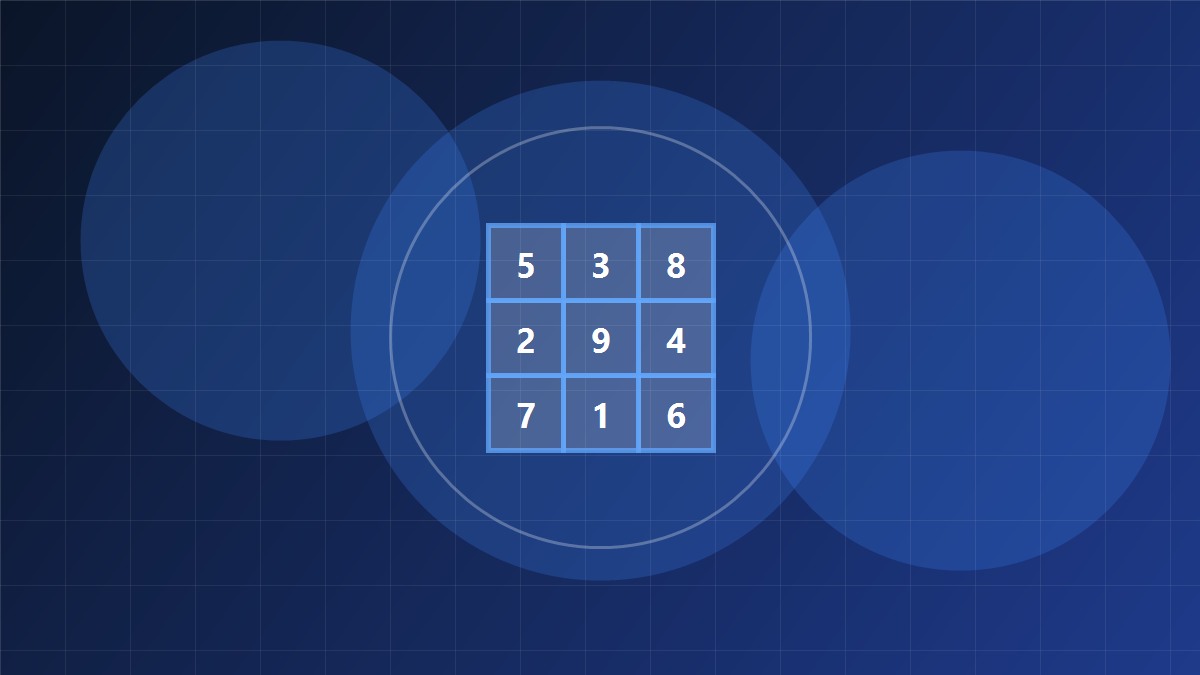
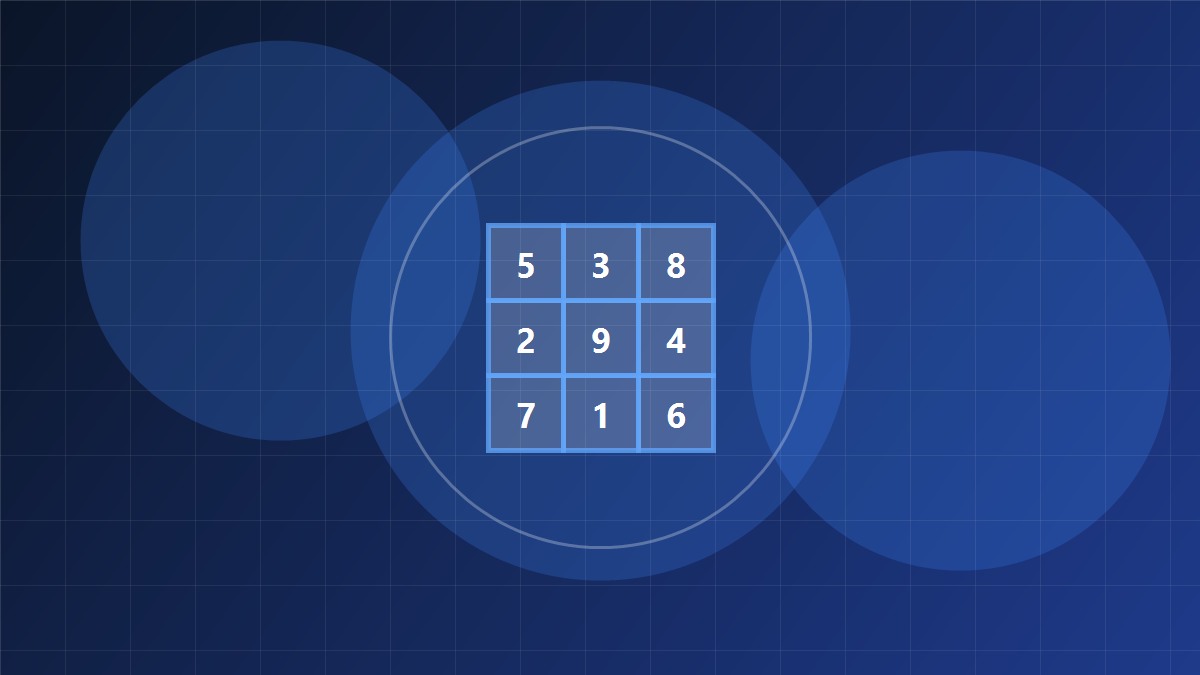
- 3. Magic Sum Squares: An ancient mathematical classic where every row, column, and diagonal must add up to the identical "magic total." Magic squares teach algebraic balancing, numerical symmetry, and mental addition strategies in a visually harmonious grid.
- 4. Pictorial & Emoji Arithmetic Systems: Replace abstract algebraic variables (X and Y) with friendly cartoon graphics like strawberries, stars, and puppies (e.g., Apple + Apple = 10; Apple + Banana = 9). Children solve simultaneous equations intuitively and eagerly, completely unaware that they are performing middle school pre-algebra!
- 5. Multiples & Skip-Counting Mazes: Students must navigate a winding labyrinth by only stepping on tiles that are multiples of 4, or prime numbers, or even digits. This transforms repetitive skip-counting into an active navigational quest.
- 6. Cross-Number Arithmetic Grids: The mathematical sibling of the crossword puzzle. Clues are arithmetic expressions (e.g., 12 x 8 or Half of 144), and the answers intersect across a grid, offering self-correcting confirmation for young calculators.
- 7. Target Number & Operations Challenges: Present learners with four random single-digit numbers (such as 3, 5, 7, and 2) and challenge them to reach a target sum of 24 using addition, subtraction, multiplication, and parentheses. This open-ended challenge encourages creative problem solving and demonstrates that many valid pathways lead to the same solution.
Fostering a Mathematical Growth Mindset
One of the greatest gifts puzzle-based learning provides is the destigmatization of mistakes. On a standard test, an incorrect answer results in a red mark and a diminished score. In a math puzzle, however, discovering a discrepancy is simply part of the gameplay. A student who notices that a magic square row does not balance simply pauses, re-evaluates their distribution, and tries another combination. This experimental trial-and-error approach builds cognitive resilience and teaches children that productive struggle is the foundation of genuine learning.
How to Launch a "Puzzle Math Friday" Station
Elementary educators can easily revitalize their weekly curriculum by dedicating the final 45 minutes of each Friday to differentiated math puzzle stations. Organize students into collaborative pairs, distribute laminated worksheets with dry-erase markers, and play upbeat background music. Encourage partners to talk through their reasoning aloud: "If this corner is 5, then this tile has to be 3 because the row sums to 8!" Verbalizing mathematical logic cements concepts and builds collaborative communication skills.
Home Enrichment Tips for Parents Without Tears
When supporting your child's math journey at home, avoid emphasizing speed. Celebrate ingenious strategies rather than quick answers. If your child feels stuck on a puzzle, ask open-ended questions like: "What do we already know for certain?" or "What would happen if we tested this number first?" By framing math as a cooperative investigation, you banish homework tears and cultivate lifelong intellectual curiosity.
Ready to bring math excitement into your classroom or living room? Use PuzzleNest’s Free Math Puzzle Generator and Sudoku Maker to create custom, printable worksheets with answer keys today!