The Coding Mirage: Why Syntax is Not the Starting Line
In elementary education, there is an aggressive push to put young children in front of computer screens to "learn to code." From kindergarten coding apps featuring cartoon robots to tablet software with colorful drag-and-drop code blocks, the societal consensus seems to be that keyboard fluency and coding syntax are the prerequisites for digital literacy.
Yet, software engineers and computer science professors consistently voice a critical counter-perspective: Syntax is ephemeral, but Computational Thinking is eternal. Programming languages like Python, Java, or JavaScript evolve constantly. But the foundational cognitive architecture of computer science—the ability to decompose massive challenges, identify repeating patterns, abstract away unnecessary noise, and design foolproof step-by-step algorithms—can be cultivated completely offline, screen-free, and unplugged using humble printable logic puzzles.
1. The 4 Pillars of Computational Thinking in Paper Puzzles
Computer scientists break computational thinking into four core pillars. Notice how each pillar is effortlessly trained through traditional paper-and-pencil puzzles:
A. Decomposition (Breaking Big Problems into Small Chunks)
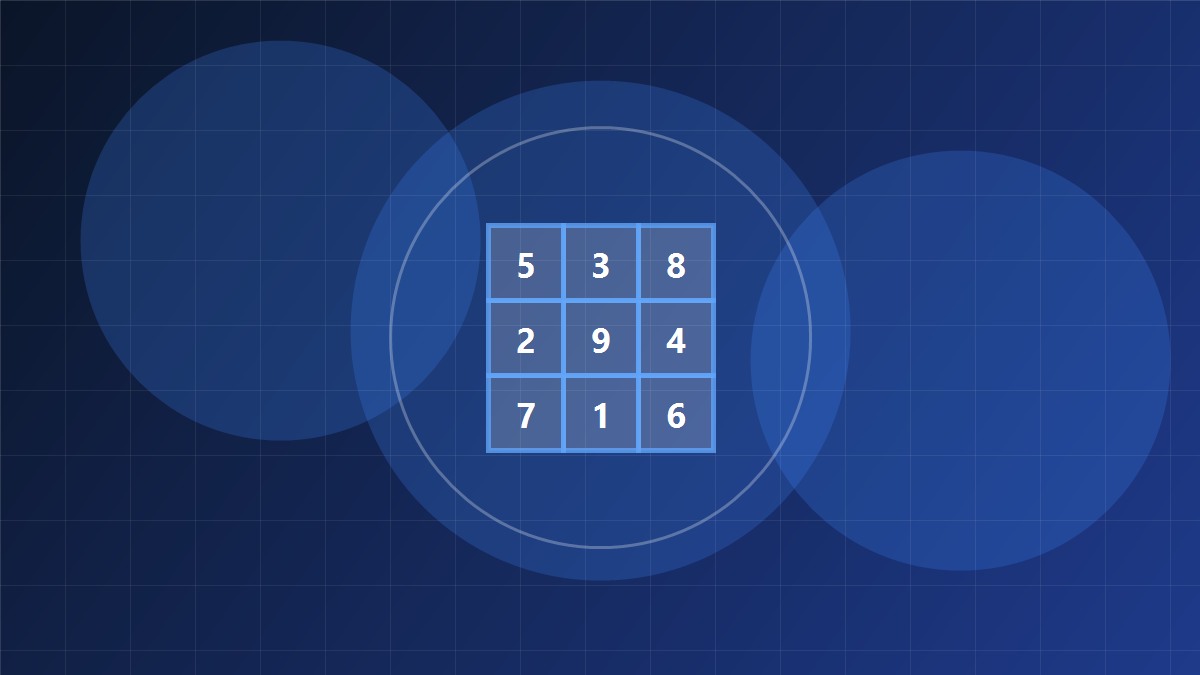
In software architecture, you cannot build an entire application in a single step. You break it into modules, functions, and isolated routines. Similarly, when a child approaches a complex 9x9 Sudoku grid, they cannot solve all eighty-one cells simultaneously. They decompose the puzzle: focusing first on Row 3, then analyzing Box 5, then isolating single candidate cells. This teaches children that overwhelming challenges become manageable when systematically partitioned.
B. Pattern Recognition (Detecting Similarities and Sequences)
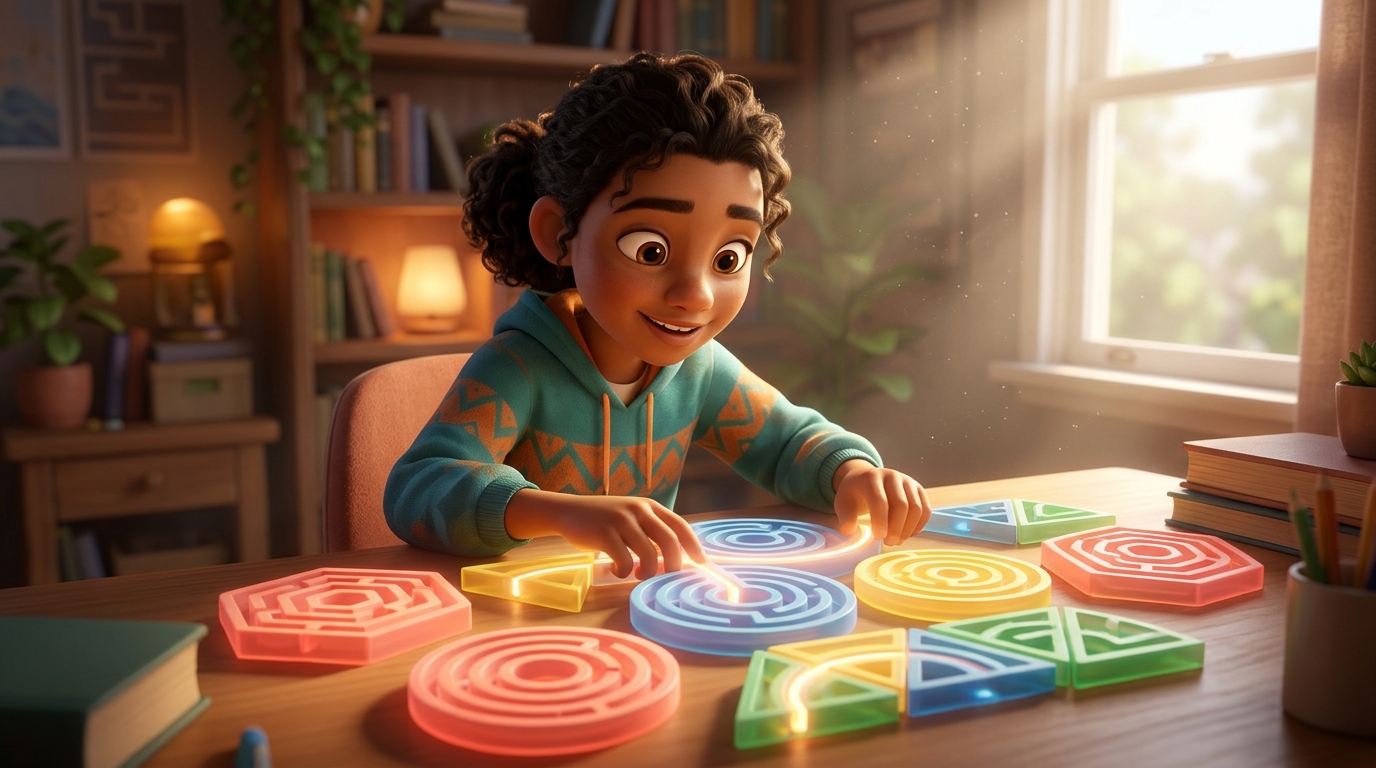
Recognizing repeating trends allows programmers to write reusable loops rather than duplicating code. In a word search or cryptogram, children scan for repeating digraphs (-ING, -TION, TH-) and letter frequencies. In geometric mazes, they identify recurring corridor loops and dead-end signatures. Their visual cortex learns to detect structural patterns instinctively.
C. Abstraction (Filtering Out Noise to Focus on What Matters)
Abstraction is the art of stripping away irrelevant details to model core reality. In a maze or logic grid, the decorative theme—whether it features cartoon astronauts or underwater divers—is completely abstracted away. The child's mind zeroes in on the underlying network topology, vertices, and truth-table parameters. This is the exact skill required to design clean database schemas and software object classes.
D. Algorithmic Design (Designing Step-by-Step Rules)
An algorithm is simply a clear, unambiguous recipe for solving a problem. When a student learns the "Wall-Follower" rule in a maze, or the "Candidate Elimination" strategy in Sudoku, they are executing formal deterministic algorithms. When they devise their own solving strategies and teach them to a classmate, they step into the shoes of an algorithmic designer.
"The best computer scientists are not people who type fast; they are deep, patient problem-solvers who can model complex logical systems in their minds. Paper puzzles build that mental sandbox without digital distractions."
2. Three Engaging Unplugged Computer Science Activities
- The Human Robot Algorithm Maze: Print a grid maze. Have one student write a step-by-step "program" on an index card using only four command primitives: MOVE_FORWARD(1), TURN_LEFT(90), TURN_RIGHT(90), REPEAT(n). Another student acts as the "Computer," blindly following the code with a pencil. If the pencil crashes into a maze wall, the team must "debug" their code!
- Binary Logic Gate Sudoku: Introduce students to Boolean logic gates (AND, OR, NOT). In a modified 4x4 grid, cells must satisfy conditional Boolean rules (e.g., "Cell A must be greater than 2 AND an even number"). This bridges elementary arithmetic with digital circuit design.
- Run-Length Compression Puzzles: Teach kids how computers store images using pixels. Provide a grid where rows are encoded with run-length numbers (e.g., 3W, 2B, 3W meaning 3 white pixels, 2 black pixels, 3 white pixels). When students shade the grid according to the code, a surprise pixel-art picture appears!
Preparing Minds for the AI Century
As Artificial Intelligence tools increasingly automate basic code generation, the human workers of the future will not be valued for their ability to write routine syntax. They will be valued for their higher-order computational creativity: identifying ethical edge cases, structuring complex problems, and evaluating algorithmic truth. Unplugged puzzle-solving builds the exact cognitive stamina required to thrive in this new landscape.
Build your students' algorithmic minds today! Explore PuzzleNest’s suite of Free Sudoku Grids, Mazes, and Logic Generators to download print-ready computational thinking worksheets in seconds!