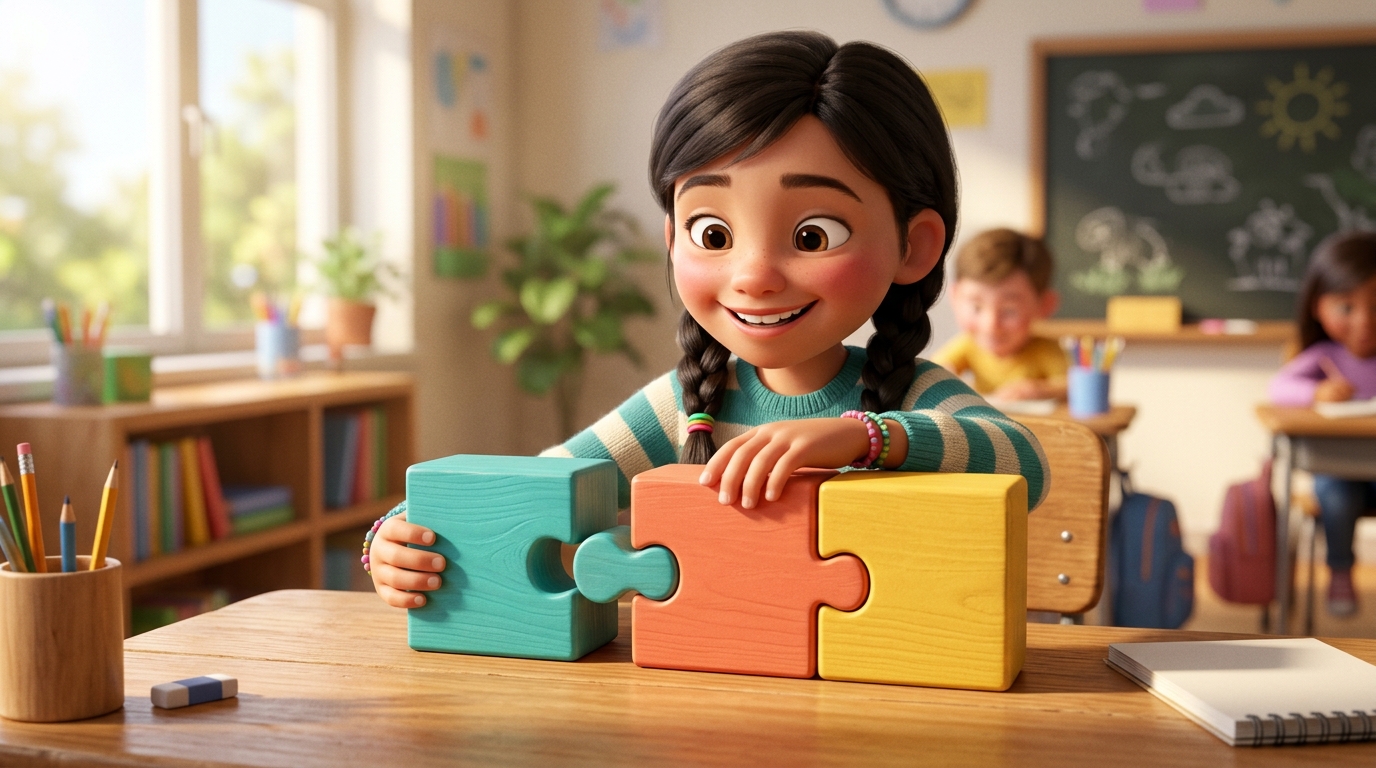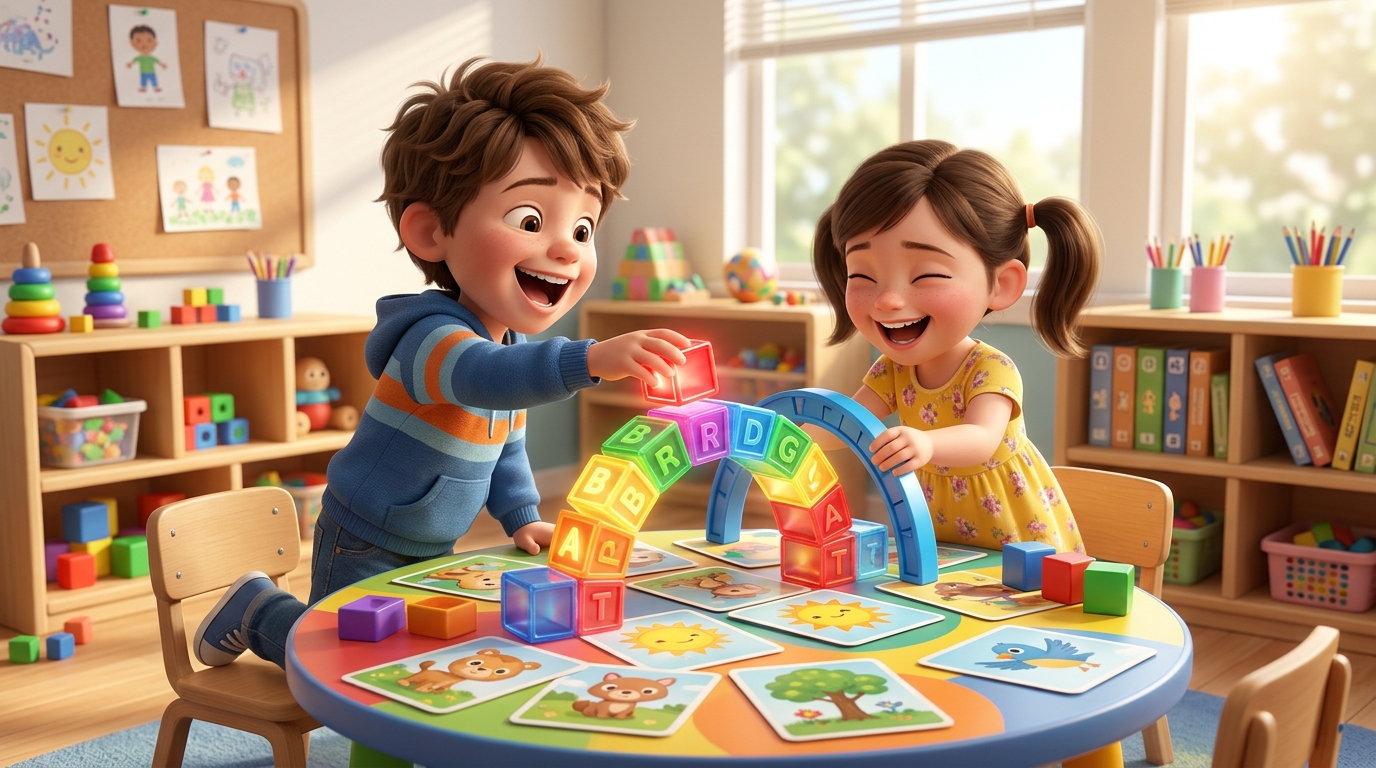
Building Bridges Between Two Linguistic Worlds
In dual-language immersion and English as a Second Language (ESL) classrooms, educators face a unique developmental task: nurturing literacy in two languages simultaneously without causing cognitive confusion. For decades, traditional language instruction treated languages as separate, isolated silos. Contemporary educational neuroscience, however, emphasizes the concept of translinguistic transfer—the brain's innate ability to leverage phonological and morphological skills learned in a primary language to accelerate fluency in a second.
Bilingual phonics puzzles and cross-linguistic rhyming word searches act as intuitive pedagogical bridges. By highlighting shared phonetic structures, cognates, and parallel rhyme schemes, these puzzles validate a student's home language while making English vocabulary acquisition playful and deeply rewarding.
1. Phonological Awareness Across Language Boundaries
A child who understands that the Spanish words gato and pato rhyme possesses phonological awareness—the understanding that spoken words are composed of separable sound units. This auditory discrimination skill is universal. When a bilingual student recognizes that the English words cat, hat, and bat follow the exact same rhyming principle, their prior linguistic knowledge acts as a powerful cognitive springboard.
Bilingual word search puzzles capitalize on this transfer by presenting paired thematic grids. For instance, a puzzle might feature English target words on the left with their Spanish cognates on the right, challenging students to find both while comparing their initial onsets, vowel lengths, and shared syllable endings.
2. Unlocking True Cognates with Dual-Language Matrices
Spanish and English share thousands of cognates—words that share identical or nearly identical Latin and Greek ancestral roots, spellings, and meanings. Recognizing cognates is the single fastest way for bilingual students to expand their academic vocabulary:
- Direct Suffix Transformations: Words ending in -tion in English effortlessly transform into -ción in Spanish (e.g., celebration / celebración, action / acción, imagination / imaginación).
- Adjective Suffix Bridges: Words ending in -ic map to -ico (e.g., magic / mágico, scientific / científico).
- Agent Noun Bridges: Words ending in -ist map to -ista (e.g., artist / artista, dentist / dentista).
In a Cognate Bridge Crossword, clues are presented in one language while the grid is completed in the other, requiring students to engage in fluid translingual processing that strengthens bilingual mental agility.
"Biliteracy is not about replacing one linguistic identity with another; it is about constructing a magnificent double-arch bridge where thoughts cross effortlessly in both directions."
3. Lowering the Affective Filter in Language Learners
Linguist Stephen Krashen's famous Affective Filter Hypothesis demonstrates that when language learners experience anxiety, embarrassment, or self-consciousness, their brain erects an emotional barrier that blocks language acquisition. High-stakes oral speaking drills frequently trigger this affective filter.
Printable bilingual word searches and visual logic puzzles offer a low-stakes, non-judgmental learning sanctuary. A puzzle does not criticize accent, pronounce errors, or impose rapid response timers. Working at their own pace, students absorb orthographic patterns, decipher letter combinations, and experience genuine dopamine rewards when identifying target vocabulary.
4. Four High-Retention Dual-Language Classroom Activities
- Bilingual Picture-Word Scramble: Provide students with illustrations of familiar animals or classroom objects alongside scrambled bilingual letter tiles (e.g., B-O-O-K and L-I-B-R-O) to assemble in parallel.
- False Cognate Detective Hunt: Teach critical linguistic discernment by challenging students to find "impostor words" (e.g., proving why the English word embarrassed does not mean the Spanish word embarazada!).
- Bilingual Rhyme Ladder Posters: Create classroom wall charts where students contribute pairs of rhyming words in both languages, illustrating the phonetic matches with student drawings.
- Peer Language Exchange Puzzles: Pair native English speakers with native Spanish speakers to solve cooperative bilingual crosswords, encouraging natural conversational collaboration and mutual cultural respect.
Access our library of free printable Bilingual Word Searches & Language Learning Puzzles on PuzzleNest to enrich your dual-language curriculum today!